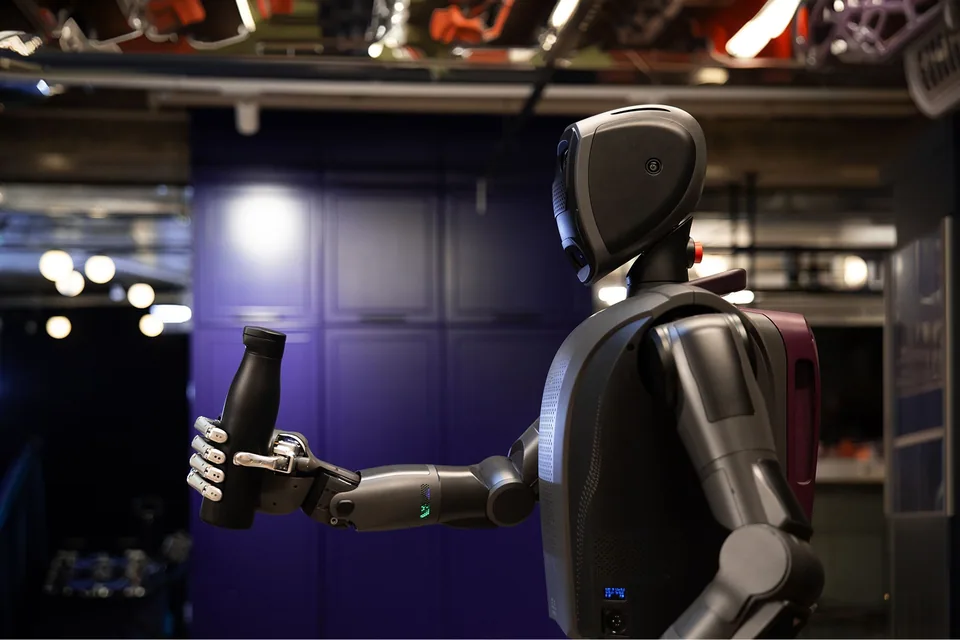
prototype
WABIAN-2 is a bipedal research robot from Waseda University in Tokyo, built in the Takanishi Laboratory as a continuation of the long-running WABOT series, which reaches back to the 1970s.
The design has as many as 41 mechanical degrees of freedom (DOF): six in each leg, two in the hips, two in the trunk, seven in each arm, three in each hand (six DOF across both hands in total), three in the neck and one in each foot with a passive toe joint. The robot stands 148 cm tall and weighs 64 kg.
Its key achievement is a gait close to that of a human, with straight knees, heel strike and toe-off, made possible by a hip mechanism that imitates the movement of the human pelvis. This sets WABIAN-2 apart from many other research bipeds, which walk with bent knees for stability at the cost of natural motion.
Compared with the newer German platform LOLA from the Technical University of Munich, WABIAN-2 has far more degrees of freedom but a less modern, heavier drive. The robot is purely a scientific platform with no commercial successor on sale, no price and no connection to the Polish market.
Data from manufacturer datasheets and product pages; median over the models of this category in the database.
no data
WABIAN-2 has no price because it is not a product: it is a research platform of a single university. You can neither buy nor rent it. We do not give a purchase price estimate, because it would be guesswork with no basis.
It is worth knowing, however, what research of this class costs. As a rough estimate, maintaining a humanoid with 41 degrees of freedom takes a team of engineers, mechanical servicing, control software and doctoral students' time, so the annual cost is measured in hundreds of thousands of zlotys. That is an order of magnitude, not a figure from a document.
For a Polish university, a realistic path is to buy an available platform, funded from a research grant or a science program, rather than copying Japanese solutions. The rules for calculating the total cost of owning a humanoid are described in “Humanoid Robot TCO: How to Calculate Total Cost”, and an overview of the prices of available models in “How Much Does a Humanoid Robot Cost in 2026”.
No confirmed distributor in Poland
WABIAN-2 is not a robot for work but for understanding how humans walk. It was built in the Takanishi laboratory at Waseda University in Tokyo and serves researchers as a platform for testing near-human gait. It stands 148 cm tall, weighs 64 kg and has as many as 41 mechanical degrees of freedom (DOF): seven in each arm, six in each leg, three in the neck, and each hand has six degrees of freedom. Humanoids usually walk with bent knees, which gives stability but does not resemble a human stride. WABIAN-2 straightens its knees, lands on the heel and pushes off from the toes, made possible by a hip mechanism imitating pelvic movement and a passive toe joint.
What is it for in practice? First, gait research: scientists compare the robot's movement with human movement and learn what happens in steps that cannot be safely performed on a patient. Second, developing knowledge useful for prostheses and exoskeletons, described in “Exoskeletons”. Third, teaching: the robot is a living argument in biomechanics and control classes, for example in universities.
It must be said plainly what WABIAN-2 is not. It has no commercial version, price or distribution, and its use is as a scientific platform. We do not know its payload, runtime or walking speed, so we do not compare it with industrial robots. It does, however, show how far imitation of the human body can go. The fundamentals of the field are covered in “How Does a Humanoid Robot Work”.
A good fit: students, doctoral candidates and researchers who want to understand the biomechanics of bipedal gait. Lecturers looking for an example of a robot with a near-human gait. Journalists and robotics history enthusiasts, because WABIAN-2 shows a line of research that influenced later humanoids.
Not a good choice for: anyone looking for a robot to buy. It is purely a scientific platform of Waseda University, with no commercial version, price or distribution, including in Poland. It is not suited to work in a company or to service applications. If you are looking for a humanoid for a university that you can actually order, look at the alternatives below or at the educational robots section.
WABIAN-2 is purely a scientific platform of Waseda University, with no commercial version.
What is realistic in this category in Poland? Universities and schools use available research humanoids and educational robots, described in “Educational Robots for Schools and Universities”. You can read about local companies and projects in “Polish Robotics Companies”. Walking like a human also matters in rehabilitation, so it is worth turning to “Exoskeletons in Rehabilitation and Industry”.
Closest in spirit, but available to order, is Unitree G1 EDU: a research humanoid in many configurations, sold in Poland, with an open SDK for university teams.
If you are interested in a research biped from Europe, take a look at PAL Robotics TALOS, a PAL Robotics platform used in laboratories.
Another Japanese direction, this time from a government institute, is represented by HRP-5P: an AIST humanoid shown performing construction tasks such as installing plasterboard.
Want to compare with a German project? Look at LOLA from the Technical University of Munich, developed as a platform for gait research.
From the American side, Valkyrie is interesting, created by NASA for work in difficult terrain.
When comparing against WABIAN-2, remember that 41 degrees of freedom do not make a robot useful for work; in practice the task and the availability of support matter.

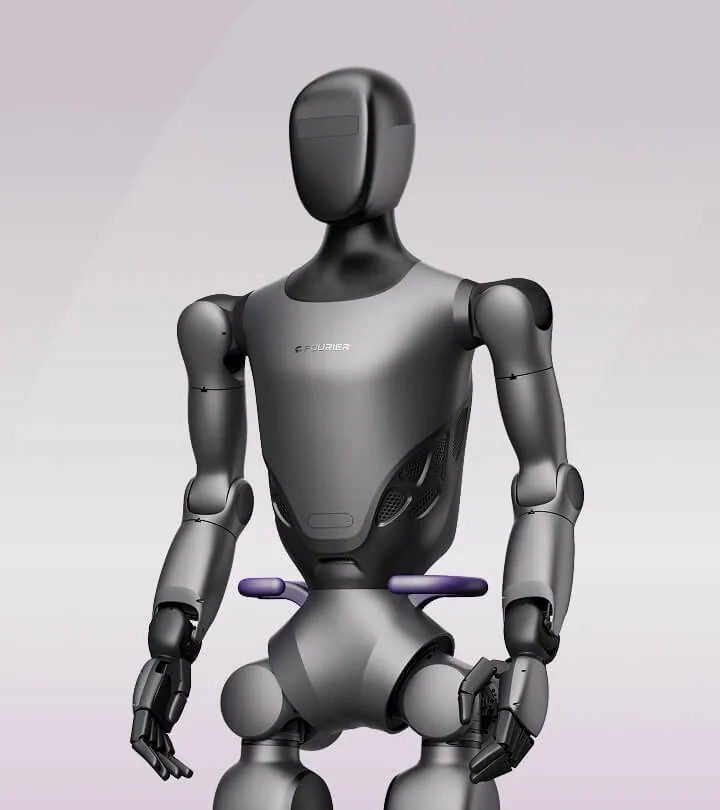
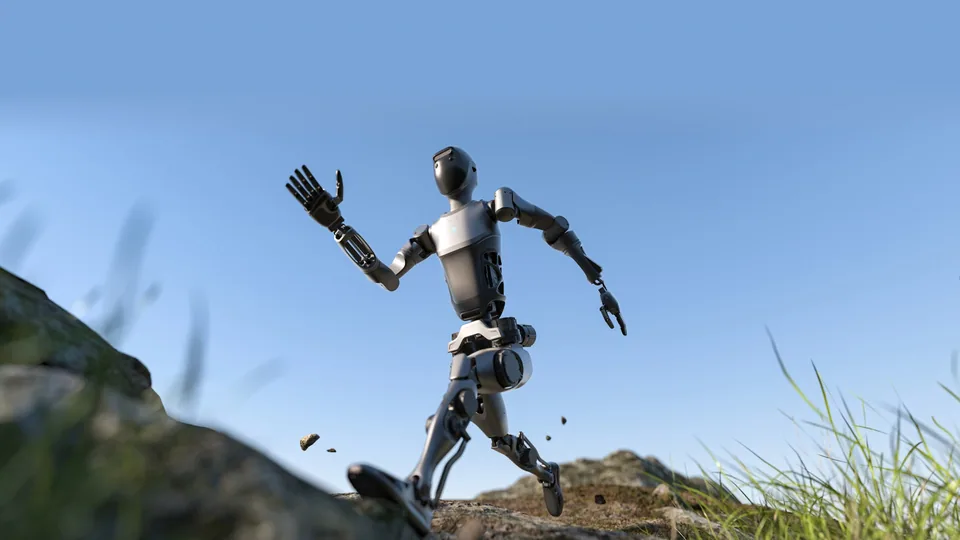
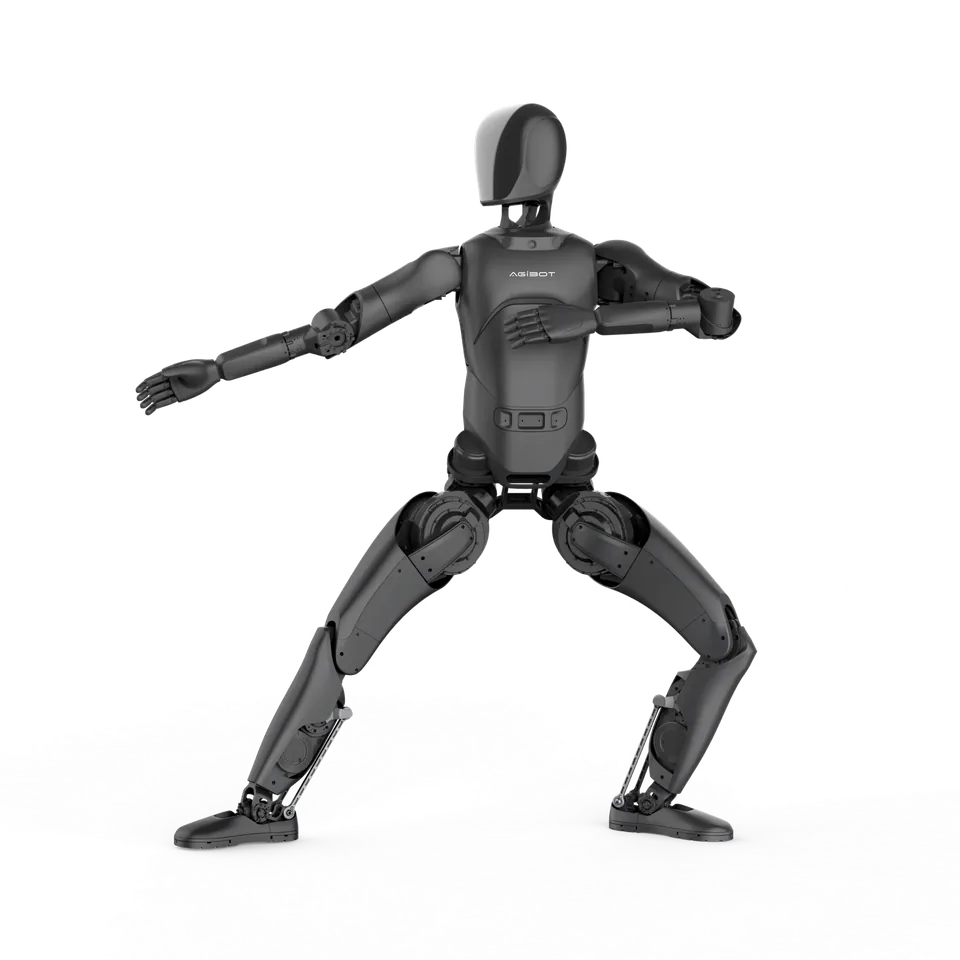
ROBOTERA (Beijing Xingdong Jiyuan Corporation)
WABIAN-2 comes from the WABIAN family of robots, developed in the Takanishi laboratory at Waseda University in Tokyo. The presentation date of this model is not given, so we do not name years. From the technical description we know that the project focused on a gait close to a human's: straight knees, heel contact and toe-off, achieved through a hip mechanism imitating pelvic movement. We describe the university in the profile Waseda University. The broader Japanese context can be seen at Honda Motor Co. and in the design of HRP-5P.
Straight knees, heel strike and toe-off: a gait very close to a human's, achieved through a hip mechanism that imitates the movement of the pelvis.
41 mechanical degrees of freedom (DOF), including seven in each arm, six in each leg and three in the neck; more than most comparable research platforms.
No. It is purely a research platform of Waseda University, with no commercial version, price or distribution of any kind in Poland.
Author, source and licence of the photo are given in the caption. Shop links may become affiliate links in future, details: How we make money · How we check