pilot
Service robotson sale
Mirokaï
Price from
approx. 116,300 PLN* (≈ EUR 26,650 at NBP rate 4.3641 of 21 October 2026)
converted from 30,000 USD, NBP rate 3.8762, as of 1 October 2026
No confirmed distributor in Poland
Pros
- Ballbot base on a ball, omnidirectional movement without legs
- 123 cm, 28 kg, 26 degrees of freedom
- 3 kg payload, up to 0.89 m/s, 4 hours of runtime
- Creator from the NAO and Pepper lineage; 17 million euro seed round
Cons
- 3 kg payload, short reach at 123 cm
- Price of about 30,000 USD comes from an aggregator, not the maker
- Only one known deployment (ISIR in Paris)
- Availability in Poland unconfirmed
- 3kgPayload
- 0.89m/sSpeed
- 123cmHeight
- 4hRuntime
- 29kgWeight
- 26DOFDegrees of freedom
Key facts
- Price from an aggregatorapprox. 116,300 PLN* (≈ EUR 26,650)
- Specificationspayload 3 kg · speed 0.89 m/s · height 123 cm
- Statuson sale
- Availability in Polandnot confirmed
- VerdictA pilot project for institutions testing social robots; not for real physical work or individual buyers.
Summary
- ManufacturerEnchanted Tools
- CategoryService robots
- Statuson sale
- Availability in PolandNo confirmed distributor in Poland
Mirokaï, from the French company Enchanted Tools, combines a humanoid torso, arms and an animated face with a patented three-stage ballbot base that balances on a ball instead of legs or wheels - a solution that allows omnidirectional movement without the risk and cost of bipedal locomotion.
The robot stands 123 cm tall, weighs 28 kg, has 26 degrees of freedom (including 2 per hand), a 3 kg payload, a speed of up to 0.89 m/s (3.2 km/h according to a third-party aggregator) and four hours of battery life. The price of around $30,000 comes from a third-party aggregator aggregator, not from the manufacturer's own price list, so treat it as indicative.
The project is led by Jérôme Monceaux, co-creator of the NAO and Pepper robots from the Aldebaran/SoftBank Robotics era, which makes Mirokaï a natural successor to Pepper in the social-robot segment for hospitals, care homes, hotels and airports. The company raised 17 million euros in a seed round described as the largest early-stage round in the history of French robotics.
The first customer was the ISIR research institute in Paris. Its strength is an expressive upper torso with a lower risk of falling than bipedal robots; its weaknesses are a limited 3 kg payload and a reach constrained by its modest height. Availability in Poland is not confirmed; the target buyers are institutions, not individual customers.
- Evolution of the MirokaïEnchanted Tools · Load in the player above
- The Mirokaï in motion: Map. Ask. Go.Enchanted Tools · Load in the player above
Specs
Data checked: · Sources: 3
Data from manufacturer datasheets and product pages; median over the models of this category in the database.
-
Height123 cmin line with the category median (120 cm, n=26)
-
Weight29 kg−47% vs. the category median (55 kg, n=25)
-
Degrees of freedom26+13% vs. the category median (23, n=9)
-
Payload3 kg−85% vs. the category median (20 kg, n=16)
-
Speed0.89 m/s−26% vs. the category median (1.2 m/s, n=25)
-
Runtime4 h−33% vs. the category median (6 h, n=27)
- category medianA higher value doesn't always mean a better robot; it depends on the application.
Dimensions and weight
- Height
- 123 cm
- Weight
- 29 kg
Motion and manipulation
- Degrees of freedom
- 26
- Hand degrees of freedom
- 2
- Payload
- 3 kg
- Speed
- 0.89 m/s
Power
- Runtime
- 4 h
Electronics and AI
- Drive
- electric (3-DOF ballbot base, non-bipedal)
- Sensors
- 2x RGBD cameras, 2x infrared cameras, 9x ToF cameras, 6x ultrasonic, 4x microphones, 8x torque sensors, 3x IMU
Price and availability in Poland
approx. 116,300 PLN* (≈ EUR 26,650)
converted from 30,000 USD, NBP rate 3.8762, as of 1 October 2026 · Updated: no data · Source (robotsguide.com)
The quoted price comes from a secondary source (an aggregator) and has not been confirmed directly by the manufacturer.
Running and deployment costs
Purchase: according to a secondary source (a third-party aggregator aggregator), Mirokaï costs $30,000 "upfront" plus monthly fees, which at the 3.8762 rate of October 1, 2026 comes to about 116,300 PLN (≈ EUR 26,650). The manufacturer has not confirmed this amount directly, so treat it as a starting point for a quotation request, not a price list. The size of the monthly fees is not given - without it you cannot calculate the total cost.
Operation and training: as a rough estimate, add integration with your environment (room maps, conversation content, safety procedures), staff training and servicing. With four hours of battery life, a full shift will need a charging plan or a second unit. Without manufacturer data we cannot quote specific service rates.
A framework for the calculation is in “Humanoid Robot TCO: How to Calculate Total Cost”. Note: availability in Poland is not confirmed, so import, transport and possible customs duty must be added to the price.
Dealers in Poland
No confirmed distributor in Poland
Applications
What it's for
Mirokaï from the French company Enchanted Tools is a robot barely taller than a ten-year-old - 123 centimeters - with an expressive face and two arms; instead of legs it has a ball on which it glides smoothly in any direction. It is not a machine for lifting pallets but a social robot - it is meant to be visible, easy to read and reassuring.
The manufacturer targets three worlds. The first is healthcare: hospitals and care homes (hospitals), where the robot can approach patients, guide them, fetch light items of up to 3 kg and relieve staff of simple, repetitive tasks. The second is hospitality: hotels and airports, covered in more depth in “Service Robots in Restaurants and Hotels” - greeting guests, giving directions, chatting. The third is retail (retail), where an expressive face and gestures are meant to draw in customers.
The ball instead of legs has its reasons. A bipedal robot (humanoid robots) has to fight for balance all the time, and a fall means cost and risk for the people around it. The ballbot lets Mirokaï travel in any direction without turning its chassis and, according to the manufacturer, without the tipping-over risk inherent in bipedal designs. The price of that advantage is limited speed (up to 0.89 m/s, or walking pace) and an arm reach limited by its small stature.
The sensors are impressive: two RGBD cameras, two infrared cameras, nine ToF cameras, six ultrasonic sensors, four microphones, eight torque sensors and three IMUs. It is a kit for working among people, not behind a barrier. How a robot's "senses" are assembled from such sensors is explained in “How Does a Humanoid Robot Work”.
Typical applications
Who it's for
Yes: for institutions that are testing human-robot interaction and have a budget for a pilot project - hospitals, care homes, large hotels, airports, research centers. Mirokaï makes sense where contact with people matters and the physical work is light: handing something over, guiding, greeting, striking up a conversation.
No: for anyone looking for a robot to do real physical work. A 3 kg payload and four hours on a battery are too little for a shift in a warehouse or factory. Nor is it a toy for an individual customer - the manufacturer points to institutions, not households. If you need an inexpensive reception robot, reach for lighter solutions from the service robots category. If a robot with legs matters to you, look at humanoid robots. And one more thing: a robot with cameras in a hospital or hotel is a GDPR issue, so read “Data Security: Robots with Cameras and the GDPR” before deploying.
Deployments
There is one confirmed deployment: the ISIR institute in Paris, as the first customer, for research on human-robot interaction. The manufacturer positions the robot in hospitals, care homes, hotels and airports, but we found no named institutions other than ISIR.
What exists in the category: service robots such as the Pudu BellaBot (56,205 PLN (≈ EUR 12,880), available in Poland from several sellers, up to 40 kg payload) are already working in Polish restaurants, as described in “Service Robots in Restaurants and Hotels”. It is a different kind of robot - a tray on wheels - but it shows that the market exists and that Polish companies do buy service robots.
Comparison
The closest competitor in spirit, and a "relative", is Pepper: Pepper, co-created by Jérôme Monceaux back at Aldebaran/SoftBank, was withdrawn from production in 2024 after about 27,000 units, so today it is more a secondary-market option and a point of reference than something to buy.
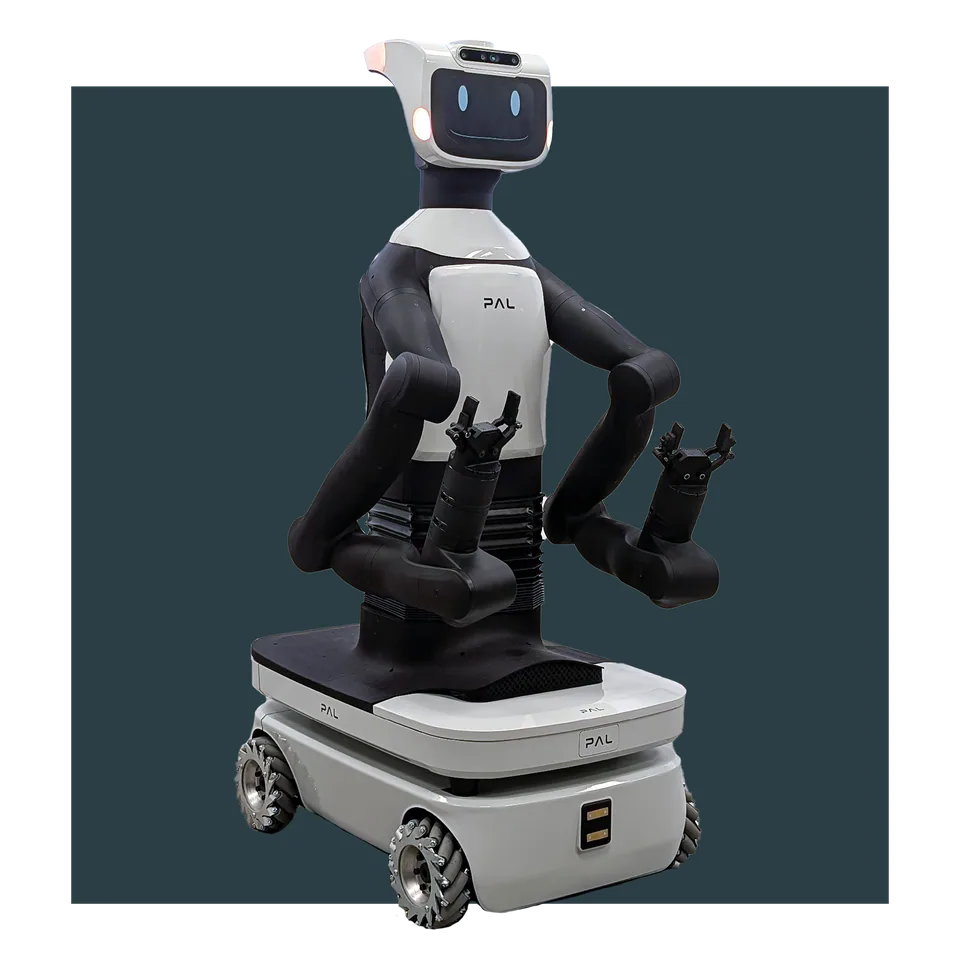
PAL Robotics ARI from PAL Robotics stands 165 cm, speaks more than 20 languages and is used for reception and interaction research; price on request, but the greater height gives a different eye contact with guests.
temi V3 is the cheapest option: from $4,499 (about 17,400 PLN (≈ EUR 3,990)), also on a subscription from $125 a month. It is a screen on wheels, with no arms - for reception and telepresence, not for gestures.
Diligent Moxi 2.0 plays in a different league of tasks: a hospital logistics robot with more than a million deliveries, priced only under a service model. If the hospital job is transporting supplies rather than conversation, it is closer to the goal.
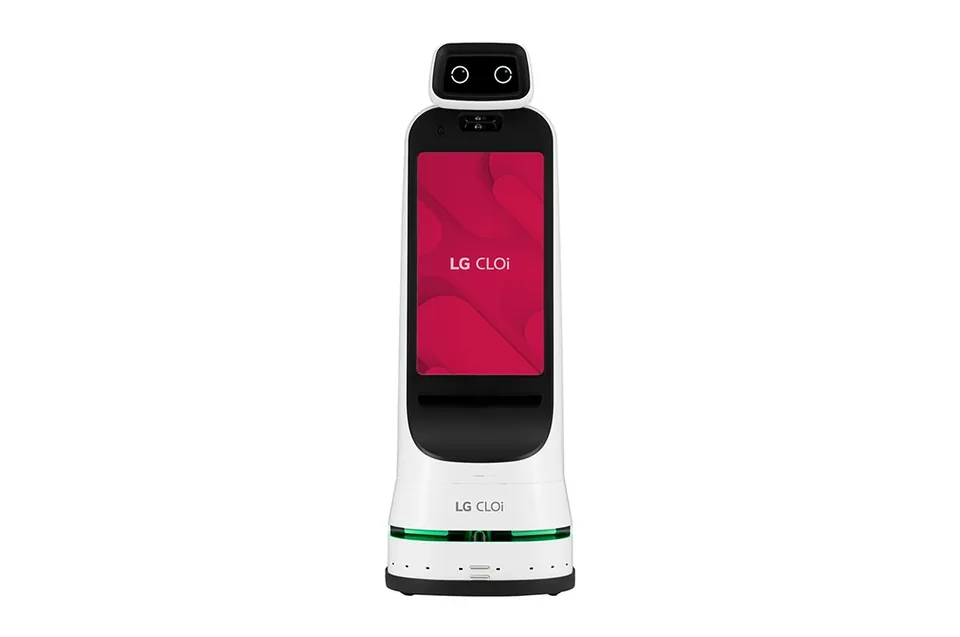
LG CLOi GuideBot ($39,990) guides visitors and shows content on two 27-inch screens; it is more practical for airports and shopping centers, though less "human".
Similar models
 on sale
 on sale
 on sale
 on sale
 on sale
History
Enchanted Tools was founded in Paris in 2021. It was set up by Jérôme Monceaux, earlier a co-creator of the NAO and Pepper robots in the Aldebaran era and then at SoftBank Robotics (SoftBank Robotics). That heritage shows in Mirokaï: an emphasis on expression, the face and natural contact.
The company raised 17 million euros in a seed round that sources describe as the largest early-stage round in the history of French robotics (Enchanted Tools). The first customer was the ISIR research institute in Paris, where the robot went into research on human-machine interaction - and that moment is regarded as the first deployment. Reliable sources do not give full generations or dates of later versions.
Sources
Frequently asked questions
Is the Mirokaï available in Poland?
No. The manufacturer Enchanted Tools (France) names no Polish shop or official distributor for the Mirokaï; enquiries go through the manufacturer's website (enchanted.tools). Price from an aggregator: approx. 116,300 PLN* (≈ EUR 26,650). Confirm service in Poland before buying.
How does Mirokaï's base differ from typical humanoid robots?
Instead of two legs, the robot uses a three-stage base balancing on a ball (a ballbot), which gives omnidirectional movement without the risk of falling over.
How much does Mirokaï cost?
About $30,000 according to a secondary source (a third-party aggregator aggregator); the price has not been confirmed by the manufacturer.
Who is behind Enchanted Tools?
The company was founded in 2021 by Jérôme Monceaux, co-creator of the NAO and Pepper robots from the Aldebaran/SoftBank Robotics era.
Author, source and licence of the photo are given in the caption. Shop links may become affiliate links in future, details: How we make money · How we check