on sale
Manufacturer
MiR (DK, Odense, founded 2013, Teradyne group): MiR250/600/1350 AMRs, a KUKA rival in-plant transport.
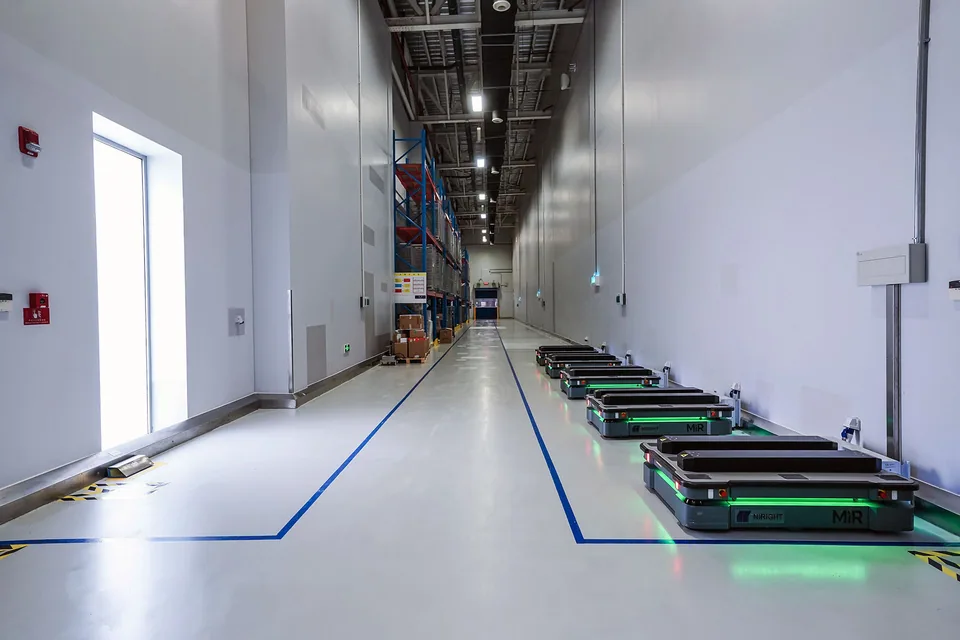
Mobile Industrial Robots (MiR), based in Odense, Denmark, and founded in 2013, is now part of Teradyne Robotics (alongside Universal Robots) and is listed indirectly through its parent, Teradyne, on NASDAQ (TER). Three of the manufacturer's seven platforms are described here: the MiR250, MiR600 and MiR1350.
Across the full product line the payload range runs from roughly 100 to 1,350 kg, although these three models have no payload figures assigned in this comparison yet. MiR is a direct competitor to KUKA in-plant transport, but with a broader, fully unified AMR portfolio, whereas KUKA offers its KMP mobile platforms as one of several product lines.
Availability in Poland has not been confirmed by a direct source. Both manufacturers also compete on price and speed of deployment at large industrial customers.
Mobile Industrial Robots was founded in 2013 in Odense, Denmark, a city that has made robotics its trademark. The company is now part of Teradyne Robotics, together with Universal Robots, and is listed indirectly through its parent company on NASDAQ as Teradyne (TER). We have no detailed chronicle here: launch dates for the successive platforms and the terms of the acquisition are not, so we do not guess at them. What is known is the track record: the manufacturer has seven AMR platforms covering payloads from about 100 to 1,350 kg, from the smallest MiR100 to the flagship MiR1350, complemented by the MiR1200 Pallet Jack, which automatically lifts pallets of up to 1,200 kg. According to the manufacturer's case studies, MiR robots work at Cummins, DENSO and Faurecia, mainly on transport between production stages. The term AMR is explained in “Robotics Glossary: 65 Terms with Polish Equivalents”, and a broader picture of the market is in “AMR Robots in the Warehouse”. Odense is also home to Universal Robots, so Teradyne Robotics has brought two Danish hubs together under one roof. That matters when judging the continuity of support.
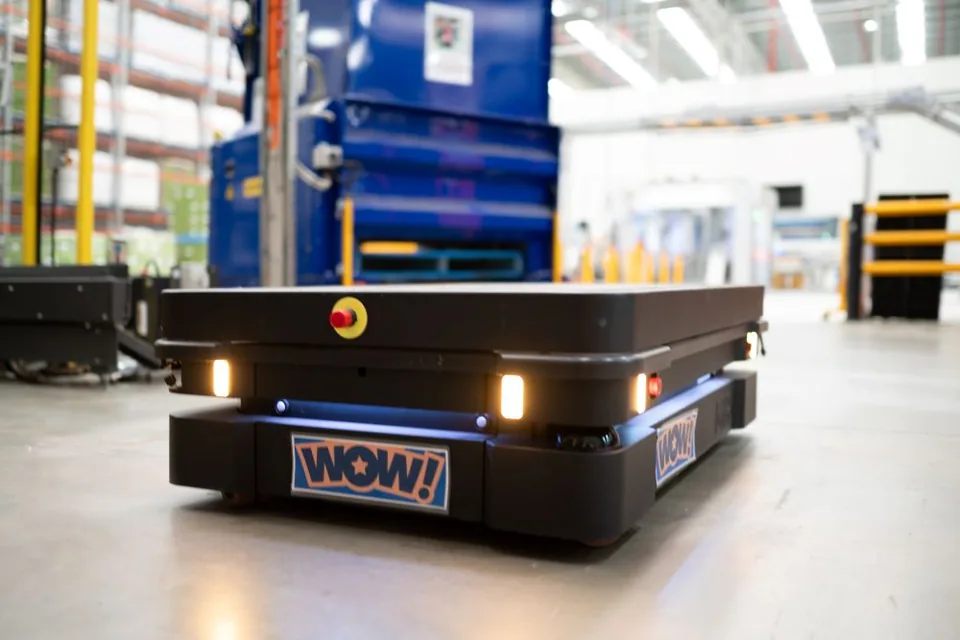
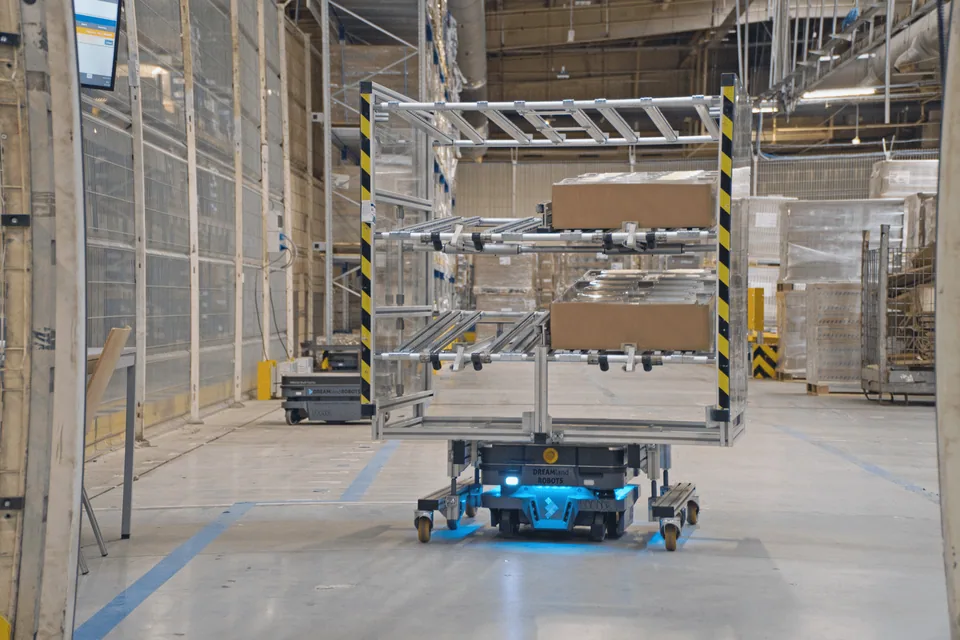
The three models described here are the middle and top of the range. MiR250 is an agile platform for internal transport: 250 kg payload, 800×580×300 mm, 94 kg weight, speeds up to 2.0 m/s, and up to 17.5 hours of operation unloaded or 13 hours at full load. MiR600 carries up to 600 kg at 2 m/s, measures 1350×910×322 mm and weighs 240 kg; it navigates with laser scanners and 3D cameras, with no floor markers needed, which sets it apart from older AGV systems based on magnetic tape. MiR1350 is the heaviest platform: 1,350 kg payload, up to 1.2 m/s and up to 9 hours 50 minutes of runtime, built for pallets and heavy loads. No price is published for any of them; the manufacturer points buyers to its ROI calculator and sales network. Notably, the catalog data is given directly by the manufacturer, which makes planning easier: weight, dimensions and runtime do not require contacting a salesperson. Only prices are missing. For a comparison with rivals, see “AMR Robots in the Warehouse”. All three models are electric and equipped with 3D cameras and laser scanners. Category: “Mobile robots (AMR)”.
MiR is one of the most widely deployed makers of general-purpose AMRs, with mature fleet-management software. Its closest competitor is Omron Robotics: the MiR250 is typically matched against the LD-250, and the heavier MiR600 and MiR1350 against the LD-450 (see Omron LD-60/90); the choice is often decided by integrator availability and compatibility with an existing fleet. In in-plant transport it also competes with KUKA, which offers KMP platforms as one of several lines, and with OTTO by Rockwell Automation and Locus Robotics, which target order picking and heavier tasks. MiR's advantages are a unified portfolio of seven platforms and membership of the Teradyne group, shared with Universal Robots. Market estimates for AMRs range from USD 50,000 to 250,000, but these are industry figures, not prices of specific models. The MiR600's strength is the combination of 2 m/s speed and high payload, which gives higher throughput than lighter platforms from the same brand.
According to our overview of AMRs in warehouses, MiR has several authorized integrators and distributors in Poland, including ASTOR, ProCobot and Lintegra, and MiR100 and MiR250 units are said to be working in factories and logistics centers in the country. This is not confirmed by a direct manufacturer source, though, so before deciding it is worth verifying the partners' status with MiR's office. We have no named Polish customer deployments. Warehouse and factory use cases are covered in “Warehouse and logistics” and factories. Prices in zlotys (PLN) are not published either, so the first step is a quote from an integrator.
MiR is a safe choice for internal transport: seven platforms, a mature ecosystem and the backing of the Teradyne group. For a Polish plant, the biggest advantage is the dense network of integrators, and the biggest unknown is the price, which you will have to extract from a quote. To start, look at the MiR250 or MiR600. Pay attention to the payload class: the MiR250 suits lighter runs between production stages, while the MiR1350 is meant to take the place of a forklift. Compare quotes from at least two integrators.
Mobile Industrial Robots (MiR)