on sale
Manufacturer
Locus Robotics (US, founded 2014): RaaS (subscription) model, Origin/Vector/Max line, no retail sales.
Locus Robotics, founded in 2014 in Wilmington, Massachusetts, sells its warehouse robots only under a Robotics-as-a-Service subscription model, not as hardware purchases. This sets it apart from Denmark's MiR, where AMRs are bought outright.
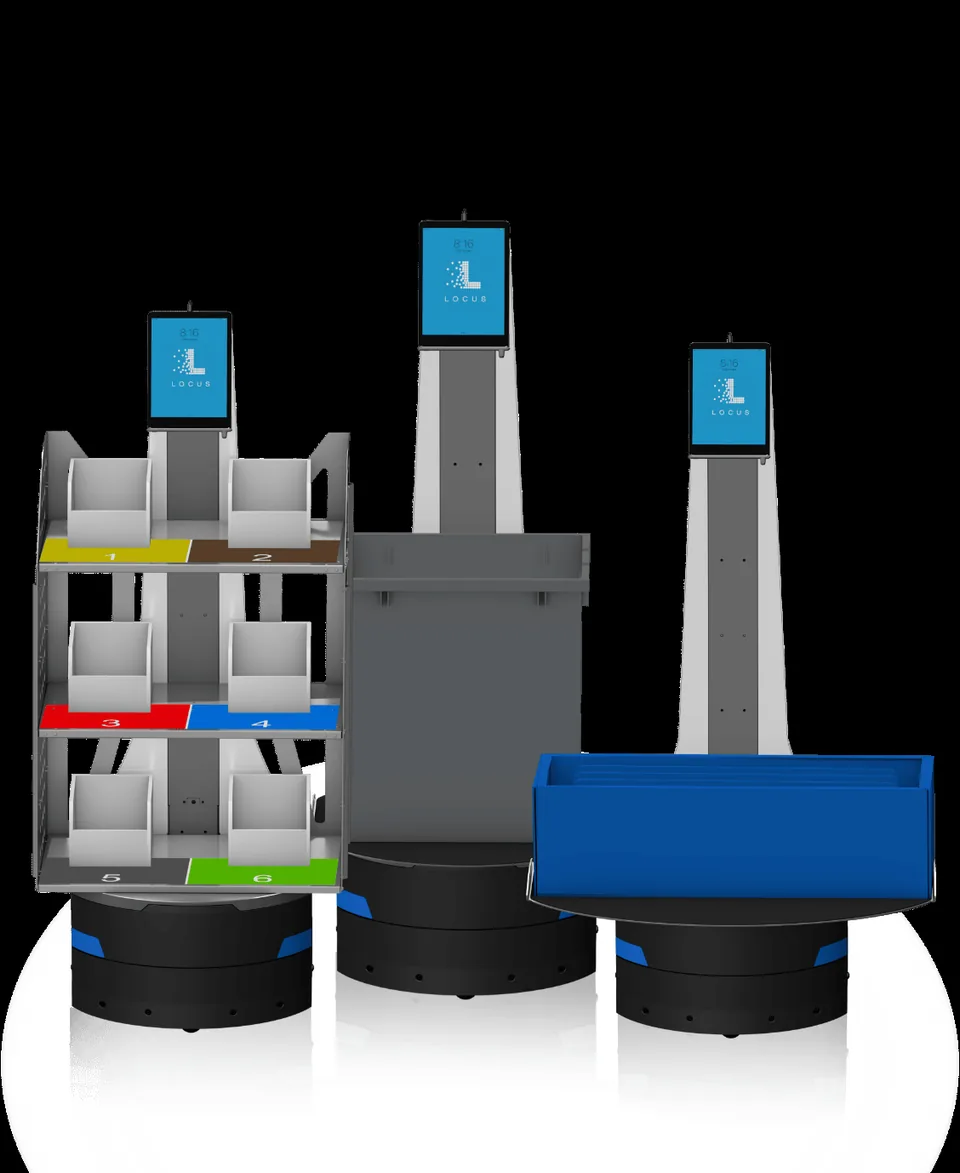
The three known models, Origin, Vector and Max, form a growing payload line coordinated by shared LocusONE fleet software, although specific payload or speed figures are not known for any of them. The segment is goods-to-person picking in e-commerce distribution centers, where the main rivals remain 6 River Systems (Shopify/Ocado) and Geek+. Data on funding, valuation and listing status has not been verified.
Its commercial presence in Poland is unknown; the RaaS model usually requires a local integrator for deployment, and none is known. A subscription model can appeal to warehouse operators who want to avoid large upfront capital spending.
Locus Robotics was founded in 2014 in Wilmington, Massachusetts. From the start the company has sold its warehouse robots only under the Robotics-as-a-Service model, that is as a subscription, not as a hardware purchase. That sets it apart from the Danish MiR, where robots are bought outright. The core of the offer is order picking in e-commerce warehouses and at logistics operators, in a mode where robots work alongside people: the worker stays in their zone, and the robot brings the goods or collects the picked items. Coordination of the whole fleet is handled by LocusONE software, shared by all models. We also do not know the number of deployments or the number of robots working at customers, so we cannot judge how large its installed base is. For warehouses that avoid large capital outlays at the start, the subscription model can be attractive, as discussed further in “AMR Robots in the Warehouse”. The typical working environment is described in “Warehouse and logistics”. Online retail is also part of this segment and is the main buyer of such solutions.
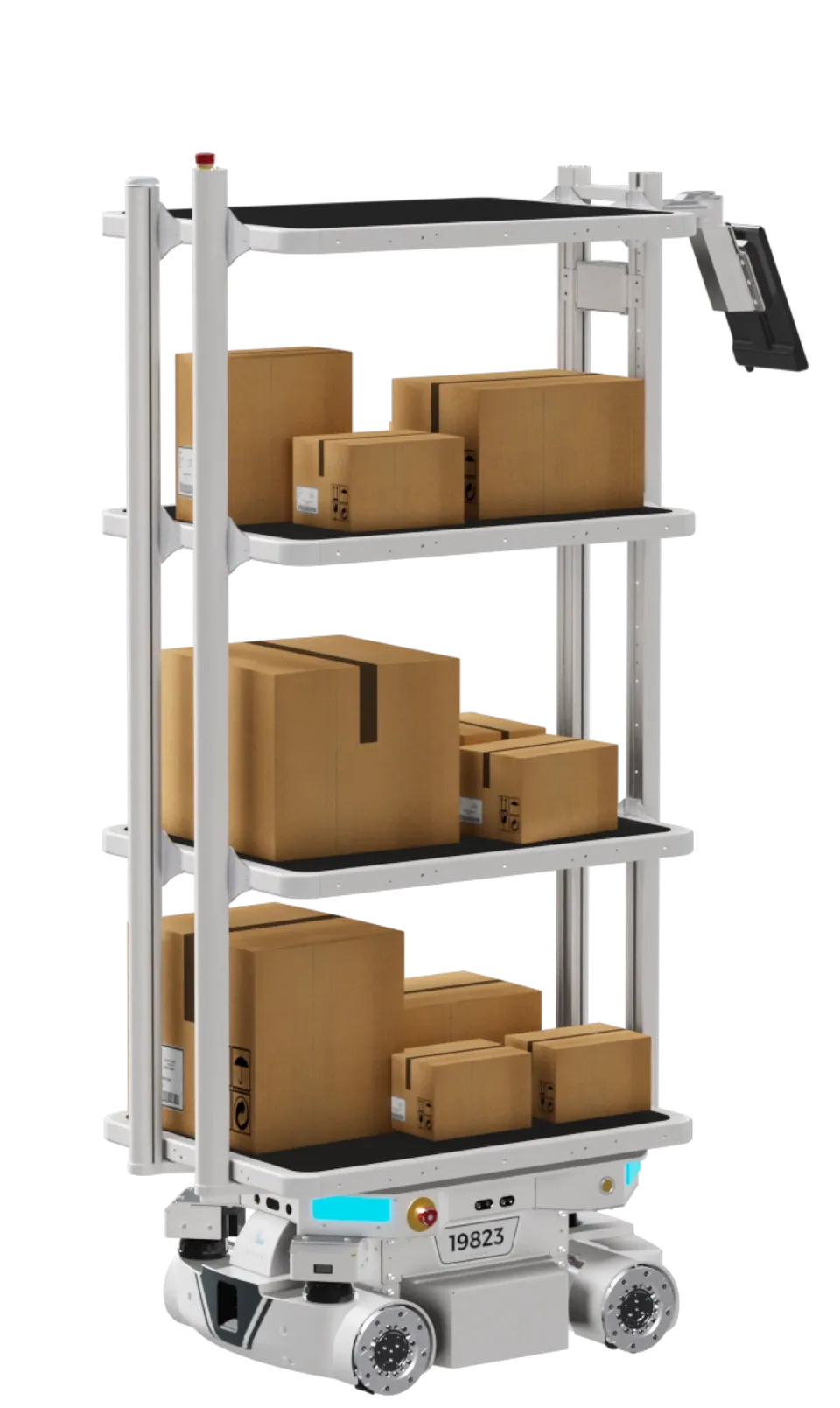
The Locus family consists of three models of increasing payload. In our catalogue we describe Locus Origin: a picking robot that weighs 45 kg, is 157.5 cm tall, carries totes of up to 36 kg and travels at up to 5 metres per second, running up to 14 hours on one charge. The other two models are Vector and Max. Vector, for cartons and medium-sized loads, has a payload of 272 kg. Max, for pallets, carries 1,361 kg, is 42 cm tall and measures 1,666 by 1,184 by 419 millimetres, which lets it drive under pallets and racks. We have only sparse data on Vector and Max, so they do not enter our catalogue. The prices of none of the models are public, and the manufacturer gives only individual quotes. General trade sources mention ranges of 25 to 40 thousand dollars to buy or 1,200 to 1,800 dollars a month for a subscription, but they do not apply to a specific model. The category is mobile robots. This is an important warning for the reader: when a manufacturer gives no price, comparing expenses requires a request for quotation.
In order picking Locus competes with the Chinese Geek+ and the American 6 River Systems, and in pallet transport its Max is compared with robots such as MiR1350 from Mobile Industrial Robots. The catalogue also includes other warehouse robots, among them Amazon Proteus, HAI Robotics HaiPick A42 from HAI Robotics and OTTO 1500 from OTTO by Rockwell Automation. Locus's distinguishing feature is the subscription model: it moves spending from the capital budget to the operating budget, at the cost of a long-term commitment. Whether this pays off depends on the stability of work volume: with an even, multi-year load the total cost of the subscription counts, and with seasonal peaks the flexibility of the fleet. The costs of such deployments, split into purchase, software and integration, are discussed in “AMR Robots in the Warehouse”. The manufacturer is also distinguished by the maturity of its deployments in e-commerce and at logistics operators, but the lack of a public price list makes comparison with rivals who state prices openly harder.
Locus's commercial presence in Poland is unknown. The manufacturer names no Polish representative, and the subscription model usually requires a local integrator, whom we do not know. According to general market information the company concentrates on large e-commerce operators in Western Europe, but their integrators also handle cross-border deployments. Polish warehouses that would like to test such an offer should ask about a pilot and about on-site service terms. When planning an investment in automation it is also worth checking the tax incentives described in “Poland's Robotization Tax Relief”. By contrast, MiR has several authorised integrators in the country.
Locus Robotics is a mature picking AMR player whose main feature is the subscription instead of a purchase. The strong side is its established position in e-commerce, the shared fleet software and the wide payload range of the family. The weak side is the lack of public prices and an unknown presence in Poland. For a Polish warehouse operator this is an offer to enquire about, not one to compare in a table, because hard figures are missing on both sides: both the price and a confirmed local presence.
Locus Robotics