on sale
Manufacturer
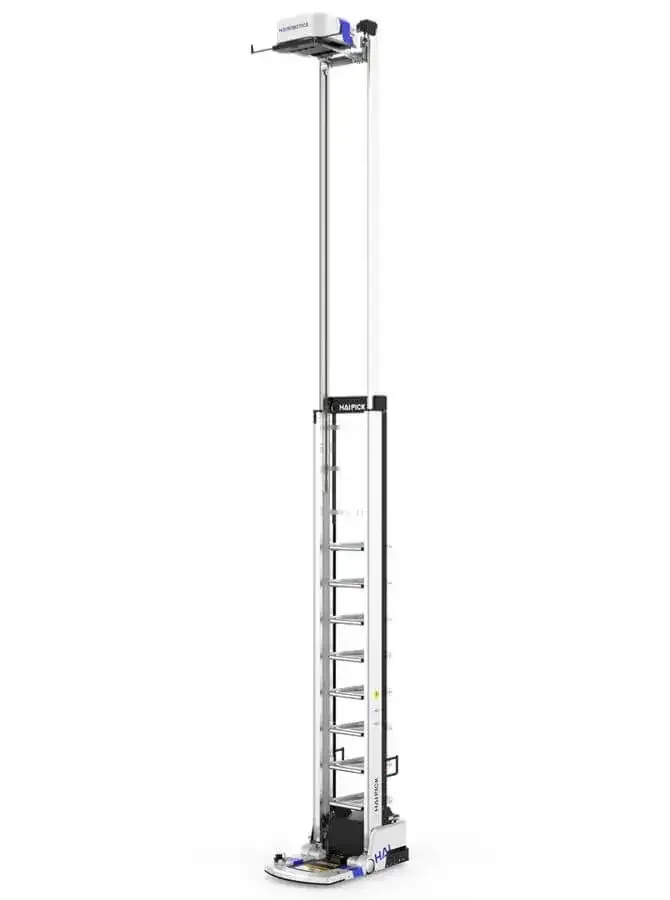
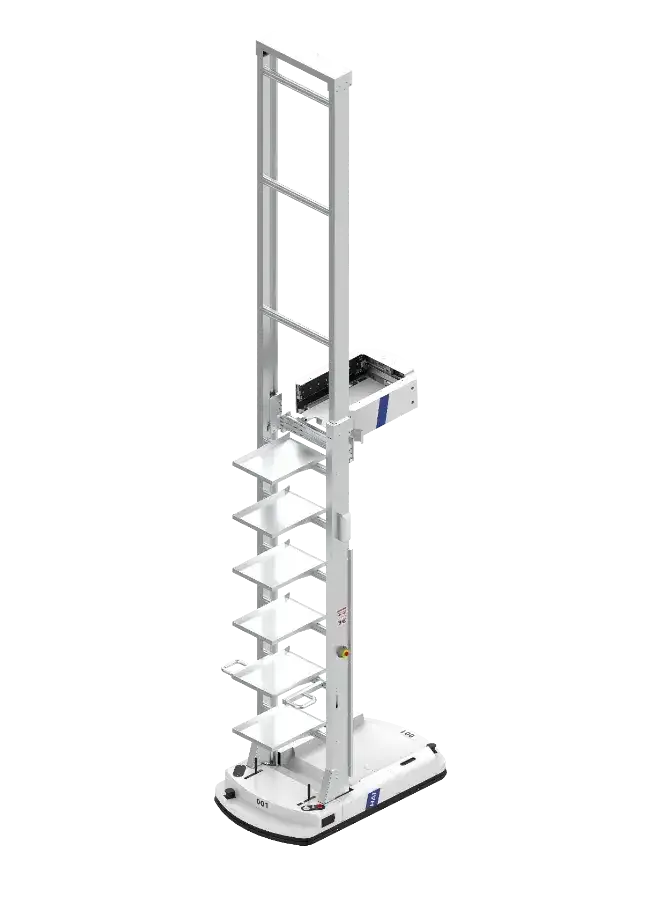
HAI Robotics (Shenzhen, 2016): ACR robots for racks up to 12 m, an AutoStore rival. HaiPick A42/A42T on sale.
HAI Robotics of Shenzhen, in business since 2016, makes autonomous ACR robots (Autonomous Case-handling Robot) that pick up totes and cartons from racks up to 10 meters high. The design competes directly with AutoStore and, to a lesser extent, with Geek+ among the firms covered here, though HAI bets on vertical storage density rather than a container grid.
The offering is complemented by heavier Heavy Duty Companion robots (K600/K1000 series) for pallet transport, which widens the portfolio beyond carton picking. Two variants of the flagship system are known, the HaiPick A42 and A42T, both on sale. The sources hold no data on funding, valuation or headcount; the available material is a product spec sheet and an industry ASRS portal.
Presence in Poland is unconfirmed, though warehouse automation is growing fast in the country thanks to e-commerce.
HAI Robotics is based in Shenzhen and has operated since 2016. It specializes in ACR robots (Autonomous Case-handling Robot), which lift totes and cartons from racks up to 10 meters high. It is an answer to the question of how to fit more goods into the same hall when every square meter is expensive. HAI bets on vertical storage density, not the container grid familiar from AutoStore. The company also has a Heavy Duty Companion family (K600 and K1000 series) for pallet transport, so the portfolio goes beyond carton picking. Our sources are product specifications and an industry portal on ASRS systems, so we have no confirmed data on funding, valuation or headcount. The technology background of warehouse robots is covered in “AMR Robots in the Warehouse” and the category “Mobile robots (AMR)”. The idea is clear to anyone who has paid for warehouse floor space: rather than widening the hall, you grow upward.
The two models covered are variants of the flagship system. The HAI Robotics HaiPick A42 works up to 6 m high and can take up to nine totes at once, with an indicative price starting at about $50,000 (PLN 193,800 (≈ EUR 44,330 at NBP rate 4.3716 of 20 October 2026)). The HAI Robotics HaiPick A42T has a telescopic mast reaching 12 m, a 30 kg payload and also handles up to nine loads, with the price given by the maker on request. The difference is simple and important: the A42 suits halls of standard height, the A42T suits warehouses that want to use the space right up to the roof. Both are on sale. For broader context, compare the approach to internal transport with robots such as the MiR600 or Locus Origin, which drive along the floor instead of climbing the rack. Uses in the hall are covered under “Warehouse and logistics”, and the class of device under “Mobile robots (AMR)”. In practice the choice of variant depends on the height of the hall and racks: if the ceiling is 6 meters, the A42 is enough, and the A42T makes sense only where there is room for 12 meters. The sources have no data on throughput in totes per hour, so we do not give any. Anyone calculating return on investment should base it on their own warehouse data, not the manufacturer's brochure.
HAI Robotics stands in the same line as companies that want to automate picking without building whole rack systems from scratch. Our sources say so directly: the design competes with AutoStore and, to a lesser extent, with Geek+. A close neighbor is also Exotec, along with the transport robots Mobile Industrial Robots and Locus Robotics. Among the big players we list Amazon Robotics with the Amazon Proteus. We know no named HAI customers, and there is no data on revenue or market share, so we do not judge the company's scale. It is worth understanding the difference in philosophy: AutoStore is a dense grid from which a robot lifts a tote from above, while HAI is a robot that drives between racks and climbs them. Each approach has a different cost curve and different demands on the hall. The comparison should therefore be made on a real project, not a brochure, and in the text “AMR Robots in the Warehouse” you will find reference points for the AMR class, including in the context of the orders discussed in “Agility Digit in Warehouses”.
HAI Robotics' presence in Poland is unconfirmed: we have no Polish distributor and no named deployment. Warehouse automation is growing in the country thanks to e-commerce, as seen in “AMR Robots in the Warehouse”, but the link to HAI is our hypothesis, not a fact. If you run a warehouse in Poland, ask the manufacturer about an integration partner and about service support in Europe. Polish integrators are listed on the map at “Polish Robotics Companies”. Once a partner's presence is confirmed, we will update this profile. Until then, treat HAI as an option to inquire about, not to order off the shelf, and compare it with offers from local integrators.
HaiPick is a solution for large warehouses with tall racks and a clearly calculated return on investment, not for a small hall. The biggest unknown is local service. Before you ask for a quote, run the calculation following the guidance in “How to Buy a Cobot Step by Step” and compare it with autonomous carts such as the MiR600. For warehouses with tall racks it is worth considering; for the rest it is more of an excess. Start by measuring your own needs, and only then look at an offer.
HAI Robotics