on sale
AgiBot (Zhiyuan Robotics)Humanoid robots
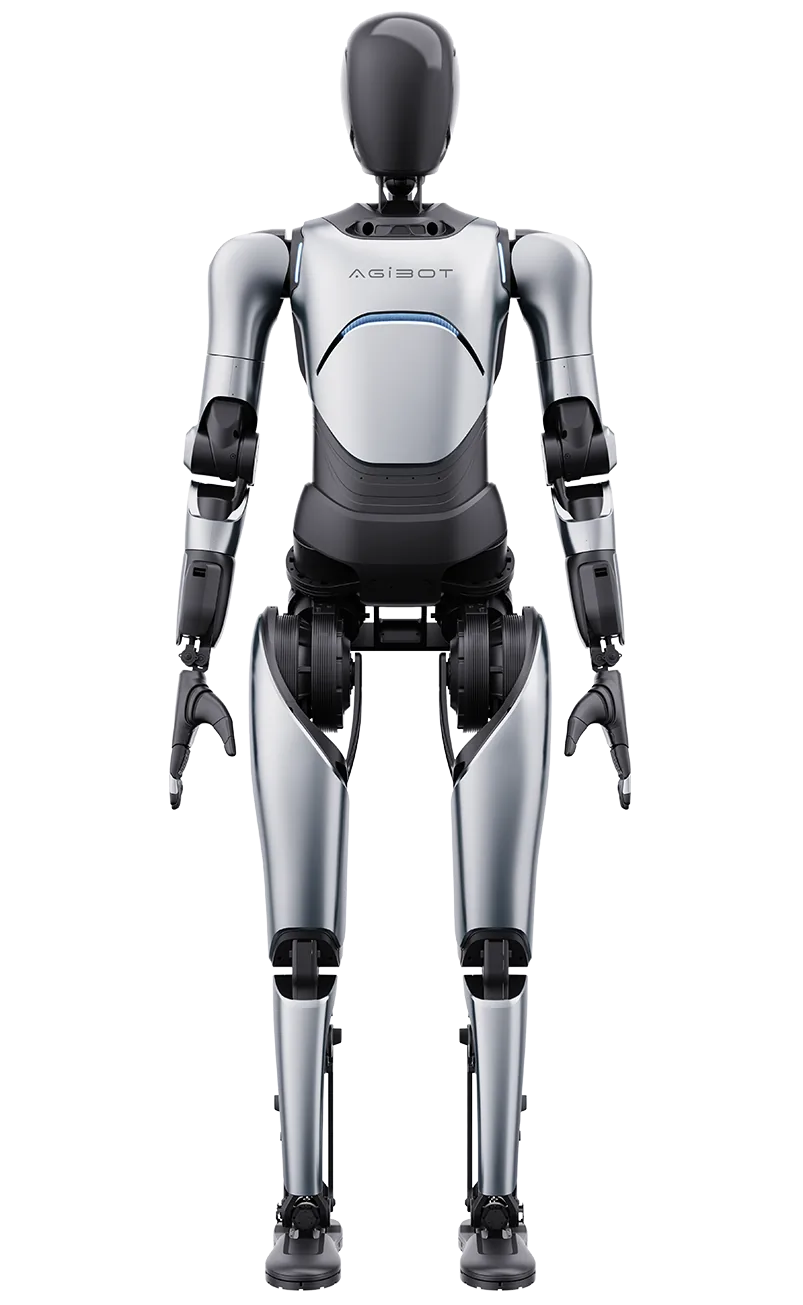
AgiBot A2 (Yuanzheng A2)
- 169 cmheight
- 2 kgpayload
- 213,200*price (PLN)
Manufacturer
China's AgiBot/Zhiyuan Robotics: series production of humanoids since 2024, Lingxi X2 from just USD 13,800.
Founded in February 2023 in Shanghai by former Huawei engineers, Deng Taihua and Peng Zhihui (known in China as “稚晖君”), Zhiyuan Robotics (brand: AgiBot) is now one of the fastest-growing Chinese humanoid makers, with investors such as HongShan, Hillhouse Investment and BYD.
By January 2025 the company had produced more than 1,000 units, reaching series-production status as early as December 2024, a pace unattainable for most Western competitors, including Figure or Apptronik. The range comprises the general-purpose A2 (from USD 54,999), the cheaper A2 Lite (USD 44,560), the wheeled A2-W and the consumer Lingxi X2 from just USD 13,800, the lowest known price in this segment.
There is, however, no distributor or announcement of entry to the Polish or EU market, which, given Chinese export restrictions, remains an open question.
In February 2023 in Shanghai, the company Zhiyuan Robotics, known on the market as AgiBot, was born. It was founded by former Huawei engineers, Deng Taihua and Peng Zhihui, popular in China as “稚晖君”. From the start the company moved fast. As early as August 2023 it showed RAISE A1, the first industrial humanoid; in January 2024 it opened a production plant in Shanghai; and in August of that year it launched five models at once: Yuanzheng A2, A2-Max, A2-W, and Lingxi X1 and X1-W. In September 2024 it opened the AIDEA Giga Data Factory, of over 3,000 square meters, where data is collected for training embodied AI. In December 2024 the company announced series production, with 962 units built by 15 December, and in January 2025 the thousandth robot rolled off the line. In March 2025 came the first foundation model, GO-1, and the compact Lingxi X2, which by announcement can ride a bicycle and a skateboard. In summer 2025 the first industrial deployment was completed and the operating system Lingqu OS was released, and in October 2025 the industrial robot G2 for production and logistics was shown. Reuters then reported a planned stock market debut in Hong Kong in 2026. It is a story of three years in which a startup went from drawings to thousands of units, a pace that European companies can for now only read about.
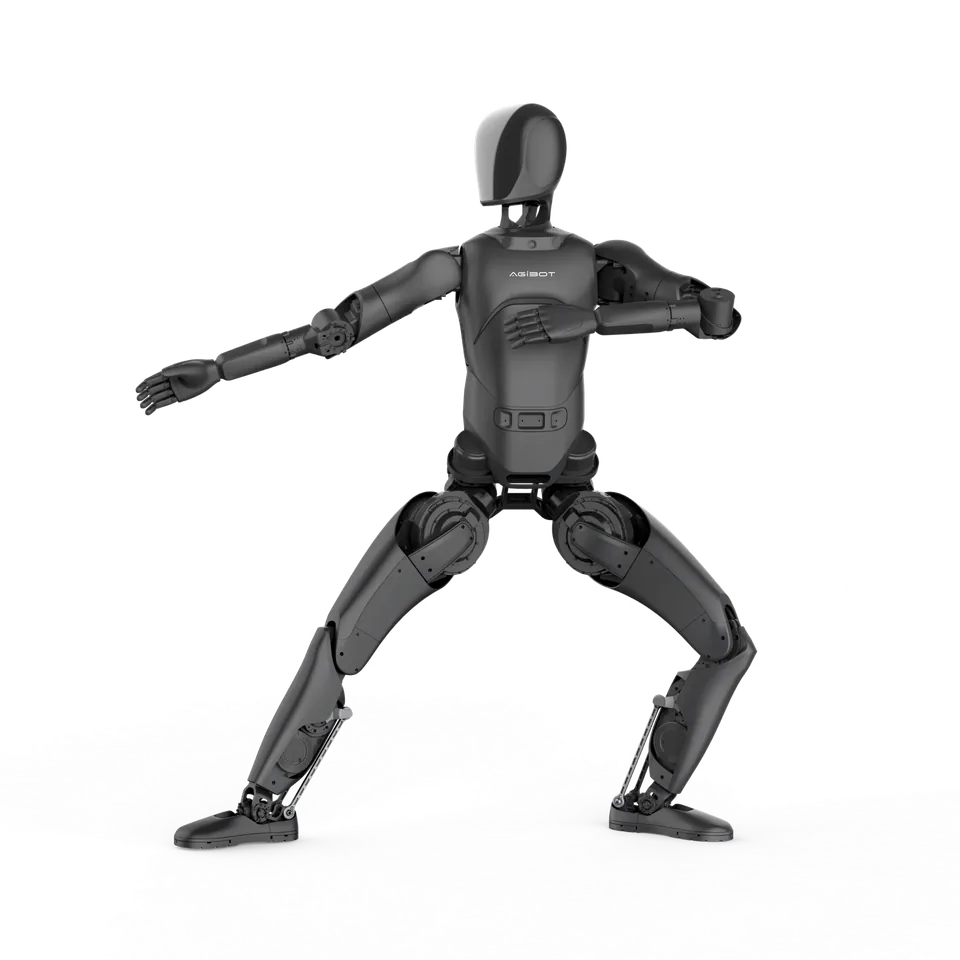
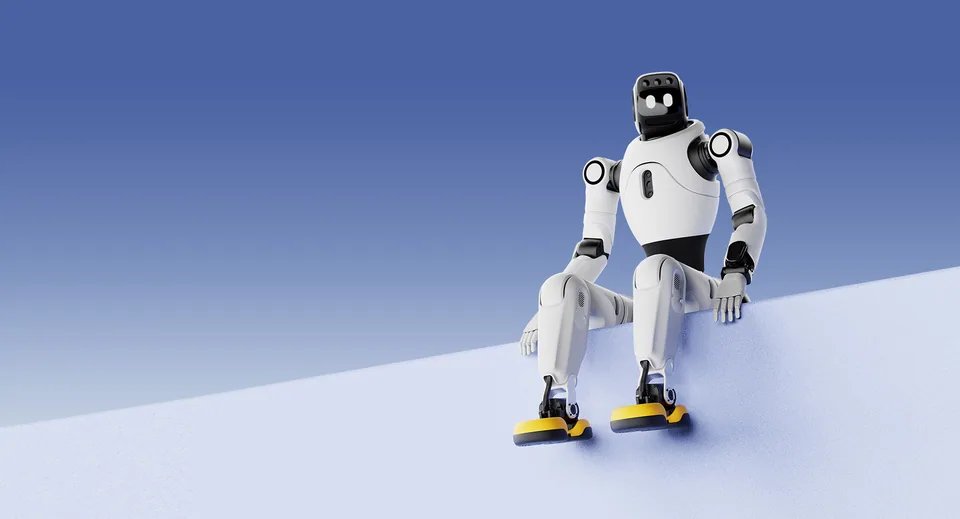
AgiBot's range lines up like a price ladder. At the top stands AgiBot A2, a general-purpose humanoid 169 cm tall and weighing 69 kg, with 40 degrees of freedom and a claimed payload of 2 kg, priced from USD 54,999. The manufacturer aims it at industry and research, though the data differ between sources, so we treat the figures with caution. One step down is AgiBot A2 Lite: the same height, but 63 kg and 23 degrees of freedom, at USD 44,560, intended for laboratories and education. AgiBot A2-W is a wheeled variant for factory work; the manufacturer gives no specification or price for it. The most interesting commercially is AgiBot Lingxi X2: 130 cm, 35 kg, 25 degrees of freedom, a price from about USD 13,800, the lowest known in this segment; it went on sale in November 2025. All models are electrically driven, and the common denominator is a software ecosystem: “VLA Models: How AI Controls Humanoid Robots in 2026” explains why the GO-1 foundation model is as important to the company as the hardware itself. Anyone who wants to compare prices with competitors will find a framework in the text “How Much Does a Humanoid Robot Cost in 2026”, and wider context in the category “Humanoid robots”.
Among Chinese humanoid makers, AgiBot is one of the best documented in terms of scale. Its investors include HongShan, Hillhouse Investment and BYD; the sizes of the rounds have not been confirmed, so we do not give them. The production numbers are harder: 962 units by mid-December 2024, the thousandth robot in January 2025, and the description of Lingxi X2 mentions 5,000 units delivered. Add a Guinness record from November 2025, in which an A2 humanoid walked 106.286 km from Suzhou to Shanghai in three days, and high-profile visits: the prime minister of Singapore in 2024, Xi Jinping in April 2025. Its main rivals are domestic players such as Unitree Robotics, UBTECH Robotics and Fourier Intelligence, and in the West Figure AI and Agility Robotics. AgiBot's advantage is speed and price; its weakness is the lack of independent tests in real plants beyond the company's own claims. More about this group is in the text “Chinese Humanoid Robots”.
The answer is short and honest: there is no Polish AgiBot distributor, no official price in zloty and no announcement of entry to the Polish or EU market. The PLN conversions given in the tables are only indicative exchange rates, not a shop offer. On top of that come Chinese export restrictions, which manufacturers speak of reluctantly. Anyone who still wants to buy such a robot for a laboratory must reckon with import, customs duty and the lack of local service; what to look out for in such a purchase is covered in “How to Read a Robot Datasheet”. Universities interested in humanoid platforms can start by comparing cheaper options from the category “Educational robots”. If a representative appears in Poland, we will update this section.
AgiBot is today one of the fastest-growing humanoid makers in the world and a brand worth watching. The most interesting is Lingxi X2: at about USD 13,800 it is hard to find a cheaper humanoid with such a set of parameters. Buying in Poland is a long way off, though: no distributor, no service, and technical data for the A2 that differ between sources. Recommendation: follow, but do not buy without a local partner. Factory applications are described in “Factories and manufacturing”.
AgiBot (Zhiyuan Robotics)
AgiBot (Zhiyuan Robotics)Humanoid robots
AgiBot (Zhiyuan Robotics)Humanoid robots
AgiBot (Zhiyuan Robotics)Humanoid robots
AgiBot (Zhiyuan Robotics)Quadruped robots
AgiBot unveils the Agibot G2 industrial robot for manufacturing and logistics
AgiBot releases LinkCraft, a no-code platform that turns video of human motion into robot actions
Reuters reports that AgiBot plans a stock market debut in Hong Kong in 2026
AgiBot unveils Genie Envisioner, a unified video-generation platform for robot learning
AgiBot completes its first industrial deployment and releases the Lingqu OS operating system
Xi Jinping views AgiBot humanoids during a visit to Shanghai
AgiBot launches GO-1, its first general-purpose embodied AI foundation model
AgiBot unveils the compact Lingxi X2 humanoid, which can ride a bicycle and a skateboard
AgiBot announces the start of series production, with 962 units built by December 15
AgiBot introduces five new models: Yuanzheng A2, A2-Max, A2-W, Lingxi X1 and X1-W
AgiBot launches RAISE A1, the company's first industrial humanoid
AgiBot (Zhiyuan Robotics) is founded by former Huawei engineer Peng Zhihui