concept
Home robotsprototype
LG CLOiD
Pros
- Two seven-joint arms with five-fingered hands
- Tilting torso on a wheeled base
- CES 2026 demo of a concrete task: folding a towel
- Backed by a large electronics group with household-appliance clout
Cons
- Prototype with no sale date
- No price, weight, height or payload published
- No runtime data
- Not available in Poland, no announced date
Key facts
- Statusprototype
- Availability in Polandnot confirmed
- VerdictFor market watchers and analysts; not for buyers, since it is an announcement without price or availability.
Summary
- ManufacturerLG Electronics
- CategoryHome robots
- Statusprototype
- Availability in PolandNo confirmed distributor in Poland
The debut of the LG CLOiD at CES 2026 put LG in the small group of electronics giants testing humanoid home robots. The robot moves on a wheeled base, has two seven-joint arms with five-fingered hands and a tilting torso, and its head houses a processor, display, speaker and camera for interacting with household members.
The manufacturer does not state its weight, height, payload or price, however, and its status remains that of a prototype with no sales date. Compared with the earlier LG Q9 concept (CES 2024), the CLOiD looks like a more polished, show-ready version with concrete task demonstrations, whereas the Q9 remained mainly a vision of a smart-home manager.
Next to the Samsung Ballie, also presented as an AI home companion, the CLOiD bets on physical manipulation (grasping, folding) rather than voice communication and device control alone. Its strengths are LG's reputation and concrete demos of household tasks; its weaknesses are the complete lack of technical and price data and the prototype status.
The robot is not available in Poland, and no market entry date has been announced. It is mainly of interest to those following trends in home robotics, not to buyers.
Specs
Data checked: · Sources: 1
Electronics and AI
- Drive
- electric, wheeled (rolling base)
- Sensors
- Cameras, Sensor array in the head display
- AI stack
- LG 'Affectionate Intelligence'
Price and availability in Poland
no data
Running and deployment costs
The price of the LG CLOiD has not been announced. The model is a prototype, so there is no price list, no distributor in Poland and no sales date. We cannot give a purchase cost or annual service fees; everything below is only an order of magnitude. Market reference points: the 1X NEO costs $20,000 on pre-order, the Sunday Robotics Memo about $20,000, and the Amazon Astro $1,449.99. As a rough estimate, the first home robot with arms from a large corporation would land in the range of several tens of thousands of zloty, but that is speculation, not an LG forecast. Operating costs depend on whether the robot runs locally or in the cloud; the manufacturer doesn't say. There is practically no training, since the device is meant for home use. The method for calculating an owner's costs is described in “Humanoid Robot TCO: How to Calculate Total Cost”.
Dealers in Poland
No confirmed distributor in Poland
Applications
What it's for
The LG CLOiD is a prototype presented at CES 2026, and the only documented task is folding a towel in promotional footage. The robot rides on a wheeled base, has two seven-joint arms with five-fingered hands, a tilting torso, and a head with a processor, display, speaker and camera. Other household chores, such as laundry or dishes, were not shown in the footage. For homes this is the main direction; hotels (hotels) or senior care would be next, but there is no data on either. A robot on wheels with arms is not a walking humanoid like those we describe in humanoid robots. A simpler base means fewer balance problems, but more trouble with stairs and thresholds. We cover the home category in home robots. The most interesting market context is the 1X NEO, which is on pre-order in the US, and the Sunday Robotics Memo, a kitchen robot in hand-built production.
Typical applications
Who it's for
Of interest to market watchers, journalists, analysts and companies that want to know where the big electronics groups are heading; people following the home-robot trend who want to compare what LG offers against the Samsung Ballie or the 1X NEO.
Not for buyers: the CLOiD is a prototype with no price, no sales date and no availability in Poland. You can't plan a budget or a deployment around it. Nor is it a robot for work in a company or school; for now there is no data on payload, weight or runtime.
If you want to buy a home robot right now, look at “How Much Does a Humanoid Robot Cost in 2026” and “1X Neo Home Robot on Pre-Order”. Also think about camera privacy in the home, which the article “Data Security: Robots with Cameras and the GDPR” discusses.
Deployments
The CLOiD is a prototype, so it has no customers. The footage from CES 2026 is a demonstration, not an installation. In the home segment, today mainly companion and monitoring robots are on sale, such as the Sony aibo ERS-1000 or the Amazon Astro; robots with arms for household chores are on pre-order or at the pilot stage (1X NEO, Weave Isaac 1). See the overview in home robots and the article on how a humanoid robot works: “How Does a Humanoid Robot Work”. When the first customer trials appear, we will update this section; for now there are none.
Comparison
1X NEO: a home humanoid at $20,000 on pre-order in the US; a real offer, though unavailable in Poland.
Sunday Robotics Memo: a kitchen robot in hand-built production, around $20,000, on sale only after 2026; it focuses on one area of the home.
Samsung Ballie: a ball-shaped robot that was withdrawn from sale in the US in February 2026 without a commercial launch; a caution about how long announcements can hang in the air.
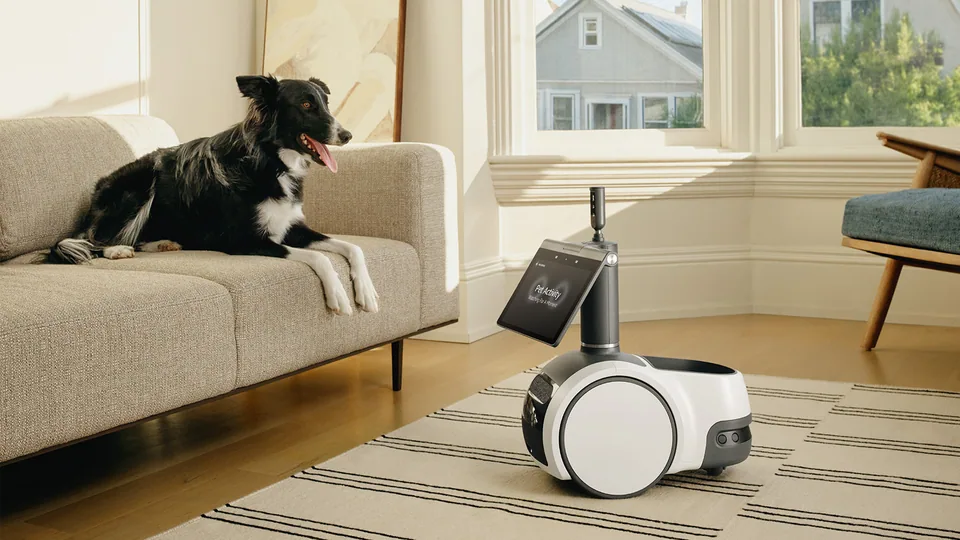
Amazon Astro: a home monitoring robot with Alexa at $1,449.99; it doesn't manipulate objects, but it was genuinely on sale.
LG Q9: LG's earlier concept from 2024; interesting as history, not as an offer.
Which to choose? For a purchase today, the only real option is the 1X NEO pre-order in the US; the CLOiD is worth only watching.
Similar models
 on sale
EnergizeLab (Shenzhen Zhuneng Technology Co., Ltd.)
Eilik
- 13.3 cmheight
- 1.5 hruntime
- 770*price (PLN)
 on sale
 on sale
 pre-order
 on sale
History
The story of the CLOiD begins in January 2026 at the CES trade show, where LG showed it as a prototype. Earlier, in January 2024, the company presented the Q9 concept (LG Q9), a two-legged smart-home manager. Its commercialization was announced, but by September 2026 neither a price nor a spec sheet had appeared.
The CLOiD looks like a step further: concrete task demonstrations and a wheeled base instead of experimental legs. For LG it is the next stage of a vision of a home assistant built around a system called "Affectionate Intelligence". A bipedal humanoid on an NVIDIA platform has also been announced for 2027 (LG Bipedal Humanoid), without specifications. Company profile: LG Electronics.
At CES 2024, LG shows Q9, a concept for a home humanoid LG Electronics
Model unveiled
Sources
Frequently asked questions
Is the LG CLOiD available in Poland?
No. The LG CLOiD is a prototype or research platform with no commercial offer in Poland; any sale would be announced by the manufacturer (South Korea).
Is the LG CLOiD on sale yet?
No. The model is a prototype, with no market launch date or price announced.
What household tasks does the LG CLOiD perform?
In the promotional footage from the show, the robot folded a towel; other tasks (such as laundry or dishes) are not documented.
How does the LG CLOiD differ from the earlier LG Q9?
The CLOiD (2026) showed concrete demonstrations of household tasks, whereas the Q9 (2024) remained mainly a smart-home manager concept.
Author, source and licence of the photo are given in the caption. Shop links may become affiliate links in future, details: How we make money · How we check