Aldebaran / SoftBank Robotics / United Robotics Group (now Maxtronics)
Compare
NAO and Pepper are the two most famous robots of the French Aldebaran brand, known from demonstrations, trade fairs and classrooms. To this day many people see them in conference photographs and ask which to pick for a school, a university or a shop. The answer is less obvious today than it once was, because the manufacturer, Aldebaran, announced insolvency in February 2025 and its assets were taken over by China's Maxvision Technology Corp under the Maxtronics brand. The NAO is still on offer; the Pepper has been withdrawn. This text helps to understand what is left of them and whether either makes sense in new projects.
Aldebaran / SoftBank Robotics / United Robotics Group (now Maxtronics)

Aldebaran / SoftBank Robotics / United Robotics Group (now Maxtronics)
| Feature | NAO | Pepper |
|---|---|---|
| Manufacturer | Aldebaran / SoftBank Robotics / United Robotics Group (now Maxtronics) | Aldebaran / SoftBank Robotics / United Robotics Group (now Maxtronics) |
| Price (PLN) | no data | no data |
| Height (cm) | 58.0 | 120.0 |
| Weight (kg) | 5.4 | 28.0 |
| Degrees of freedom | 25 | 20 |
| Speed (m/s) | no data | 0.83 |
| Runtime (h) | no data | 12.0 |
| Status | on sale | discontinued |
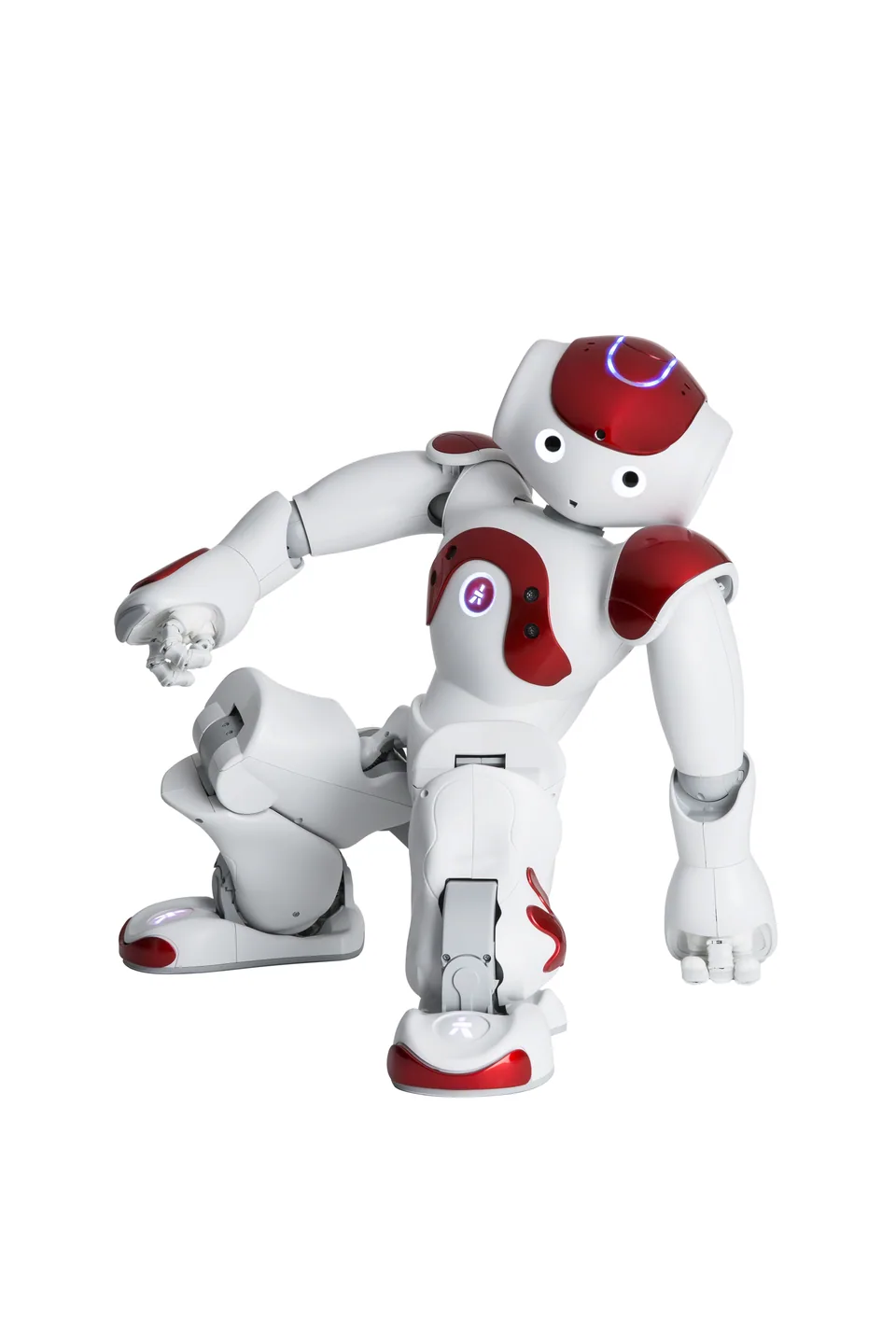
NAO is a small educational humanoid: 58 cm tall, 5.4 kg in mass, 25 degrees of freedom (“Degrees of Freedom (DOF) in Humanoid Robots”) and a 62.5 Wh battery. It has cameras, microphones, ultrasonic sensors and a gyroscope. It has been sold since March 2008, historically about 20,000 units, mainly to schools and universities. Pepper is far larger: 120 cm, 28 kg, on wheels instead of legs, with 20 degrees of freedom, 2 of them in the hands. It moves at up to 0.83 m/s, has a 795 Wh battery that lasts about 12 hours in retail mode, and a 10.1-inch touchscreen on its chest, and it runs under the NAOqi OS system.
Pepper's sensing was richer and geared to public interaction: four microphones, two HD cameras, a 3D depth sensor, touch sensors on the head and hands, gyroscopes, two sonars, six lasers and three bumper sensors. NAO is a simpler, more mobile platform for practical classes, one that can be carried and set on a table. The age of both designs shows in the figures: Pepper went on sale in 2014–2015 (sources give different dates), so both platforms were designed before language models became part of robotics, as we discuss in “VLA Models: How AI Controls Humanoid Robots in 2026”. How a humanoid works is explained in “How Does a Humanoid Robot Work”, and the place of such robots among service robots is described under “Service robots”. If you are looking for a cheap base for your own small humanoid, popular servos are made by, among others, ROBOTIS.
The status of the two models differs. NAO still appears as available. The price at the Polish seller Delta Robots of Opole is 49,900 zloty, and the seller lists the Maxtronics Nao brand in its offer. Pepper has „withdrawn” status: production was halted in 2021 and sales wound down in 2024, after about 27,000 units had been built. It is officially not available in Poland, although the same seller lists Pepper among brands in its offer, so at most second-hand units come into play; their condition, software licences and parts availability must be checked individually.
The greatest risk is support. After Aldebaran's insolvency was announced, servicing of the installed base of robots is to be continued by the firm RobotLAB without interruption, but a prospective buyer should reckon with the risk of gaps in parts supply and support. When buying a NAO for almost 50 thousand zloty, such questions matter enormously: ask about warranty, battery availability and software support over several years. General rules of total cost are described in “How to Buy a Cobot Step by Step”, and equipment costs for schools and universities are addressed in “Educational Robots for Schools and Universities”.
NAO has worked for years in the school and at the university: for teaching programming, research on human–robot interaction and classes with children. Its greatest advantage is the huge, long-standing installed base in European education and a mature software ecosystem, so there are many materials, exercises and publications.
Pepper aimed at reception and customer service in retail: it was to greet guests, hold simple conversations and show information on a screen. Today, compared with newer reception robots such as Furhat or Temi, it looks technically dated, so as a purchase option for companies in 2026 it makes no sense; it interests mainly as a historical reference point or an exhibit. If you are looking for a modern humanoid platform for research and teaching, consider a model such as the Unitree G1. An overview of educational robots is in educational robots.
NAO, on sale since 2008, remains a small educational robot (58 cm, 5.4 kg) used in schools and universities to teach programming and to research human-robot interaction. Pepper, larger (120 cm, 28 kg) and launched in 2014, was aimed at reception and customer service in retail, but its status is now "discontinued": production and sales have ended. Both robots lost official manufacturer support after Aldebaran/United Robotics Group announced the wind-down of its business in 2025; servicing of existing units was taken over by RobotLAB, which has stated there will be no break in customer support. Pepper had richer sensing for public interaction, with sonars, lasers and touch sensors on the head and hands, while NAO remains a simpler, more mobile platform for hands-on classes. Today both robots are suited mainly to second-hand use, not to new deployments.
For a school or university that already has a NAO, teachers and materials — keep the NAO, but with a clear service contract and an awareness of the risk after the manufacturer's collapse. For an institution starting from zero, a NAO at almost 50 thousand zloty is today a decision worth comparing with newer educational platforms, because the value lies mainly in the ecosystem, and that survives only if someone maintains it.
Pepper today is not a purchase recommendation but history: a withdrawn robot, with no official sales in Poland and an uncertain future for parts and software. If someone offers one second-hand, treat it as a collector's or experimental purchase and calculate the service risk from day one.
No. Its status is "discontinued": production and sales ended after the wind-down of Aldebaran/United Robotics Group.
RobotLAB took over servicing after the wind-down of the brand's previous owner, stating that support for existing customers will continue.
Pepper, at 120 cm and 28 kg, is much larger than NAO (58 cm, 5.4 kg).
No. Production was halted in 2021 and sales wound down completely in 2024; the status is „withdrawn”.
The firm RobotLAB is to continue servicing the installed base. A buyer should still reckon with the risk of interruptions in parts and support.
Pepper: 120 cm and 28 kg, on wheels. NAO is 58 cm and 5.4 kg.
At the seller Delta Robots of Opole the price is 49,900 zloty.