on sale
Pros
- 60 kg payload, up to 8 hours per charge
- Over 35 interchangeable tools
- GNSS RTK navigation without physical markers
- Working width up to 100 cm
Cons
- Price not published, project-based sales
- Each field must be mapped separately
- Limited to light cultivation tasks
- No confirmed distributor in Poland
- 60kgPayload
- 8hRuntime
Key facts
- Specificationspayload 60 kg · runtime 8 h
- Statuson sale
- Availability in Polandnot confirmed
- VerdictFor row-crop vegetables in organic farms and nurseries; without price and a Polish partner, for now more inspiration than offer.
Summary
- ManufacturerNaio Technologies
- CategorySpecialist robots
- Statuson sale
- Availability in PolandNo confirmed distributor in Poland
The French company Naio Technologies, based in Escalquens near Toulouse, designed the Oz for small vegetable farms. The compact electric robot navigates the field by GNSS RTK along a map previously drawn by the operator, with no physical markers needed.
Payload reaches 60 kg and battery life is up to 8 hours per charge, which, with a working width of up to 100 cm (depending on the tool), lets it cover one field a day without a charging break. The manufacturer does not publish a price on the product page, which is typical of agricultural robots sold project by project with grants or leasing.
The Oz supports more than 35 interchangeable tools: seeders, brushes, rigid tines and leaf guards, and it can also carry crates and pull small trailers. In the vegetable-growing segment its direct competitor is the Danish FarmDroid FD20, which combines seeding and mechanical weeding in one solar-powered machine.
The approach differs, because the FarmDroid works more autonomously through the season while the Oz needs more frequent operator attention. The Oz's strength is tool versatility across many different small-scale crops. Its weaknesses are the need to map each field separately and its limitation to light cultivation tasks.
Availability in Poland has not been confirmed by any source, although Naio states it sells across Europe through a partner network.
- [Temoignage] Le robot OZ trace les sillons, seme et bine chez le maraicher Bastien DanneelsNaio Technologies · Load in the player above
- [Temoignage] Maxime Dupont MULTIPLIE les usages de son robot OZ pour gagner du tempsNaio Technologies · Load in the player above
Photo gallery
-
Photo: Naio Technologies, product page (naio-technologies.com) -
Photo: Naio Technologies, product page (naio-technologies.com) -
Photo: Naio Technologies, product page (naio-technologies.com)
Specs
Data from manufacturer datasheets and product pages; median over the models of this category in the database.
-
Payload60 kg+20% vs. the category median (50 kg, n=5)
-
Runtime8 hin line with the category median (8 h, n=5)
- category medianA higher value doesn't always mean a better robot; it depends on the application.
Motion and manipulation
- Payload
- 60 kg
Power
- Runtime
- 8 h
Electronics and AI
- Drive
- electric
- Sensors
- GNSS RTK
Price and availability in Poland
no data
Running and deployment costs
The maker does not give a price for the Naio Oz: there is no price information on the site that was checked, and the offer is on request only. We therefore do not guess an amount. What we do know is how the market looks: in Poland agricultural robots are bought mostly directly from an importer, largely without grants, and manufacturers' prices are not public. Beyond the robot itself, count the RTK correction signal (a subscription or your own base station), working tools (seeder, harrows, hoes), charging and garage space, wear-part servicing and operator training. Funding: for agriculture, look at the programs named in our catalog, including FENG, KPO and PARP; there is no confirmation that the Oz qualifies. For how to calculate a robot's cost see “Humanoid Robot TCO: How to Calculate Total Cost”.
Dealers in Poland
No confirmed distributor in Poland
Applications
What it's for
The Naio Oz is a small electric field robot that rolls between the rows and does what organic vegetable growing demands: it sows, weeds mechanically, loosens the soil and hauls loads of up to 60 kg. The maker, the French Naio Technologies of Escalquens near Toulouse, lists four tasks: seeding, mechanical weeding, soil work and transport. It navigates by satellite: GNSS RTK guides it along a field map previously set out by the operator, with no physical markers. On a single charge it works up to 8 hours. The Oz is intended for market gardening and vegetable growing, meaning small and medium row crops where a big tractor would be overkill and hand weeding too expensive. Organic growers can cut herbicides this way, or even drop them entirely. Machines that do similar jobs on larger acreages are described in the article “Robots in Farming: How Field Automation Looks in Poland”. See also the sections “Agriculture” and gardens and the category “Specialist robots”.
Typical applications
Who it's for
The Naio Oz is for vegetable producers who grow crops in straight rows, have predictable fields and want to replace laborious hand weeding. It fits an organic farm, a nursery, a holding with a large share of specialty crops, or an educational and research project.
It is not for a farm with little land and many different crops: the average utilized agricultural area per farm in Poland was 11.59 ha in 2024, and an agricultural robot makes economic sense only with a sufficiently large area of row crops. It is also unsuitable where an RTK correction signal is missing or the terrain is very uneven. There is no confirmed distributor in Poland, so you must expect import and servicing from France.
Deployments
The maker's site does not indicate a distributor in the country, and the agricultural robotics segment remains for now the domain of occasional imports and pilots. By 2025 about 10 FarmDroid units were working in Poland, mainly with vegetable producers, and autonomous tractors such as the AgXeed are being tested, along with a domestic prototype from a consortium of Łukasiewicz and the company Unia. This shows the market is only beginning to open.
This model in applications
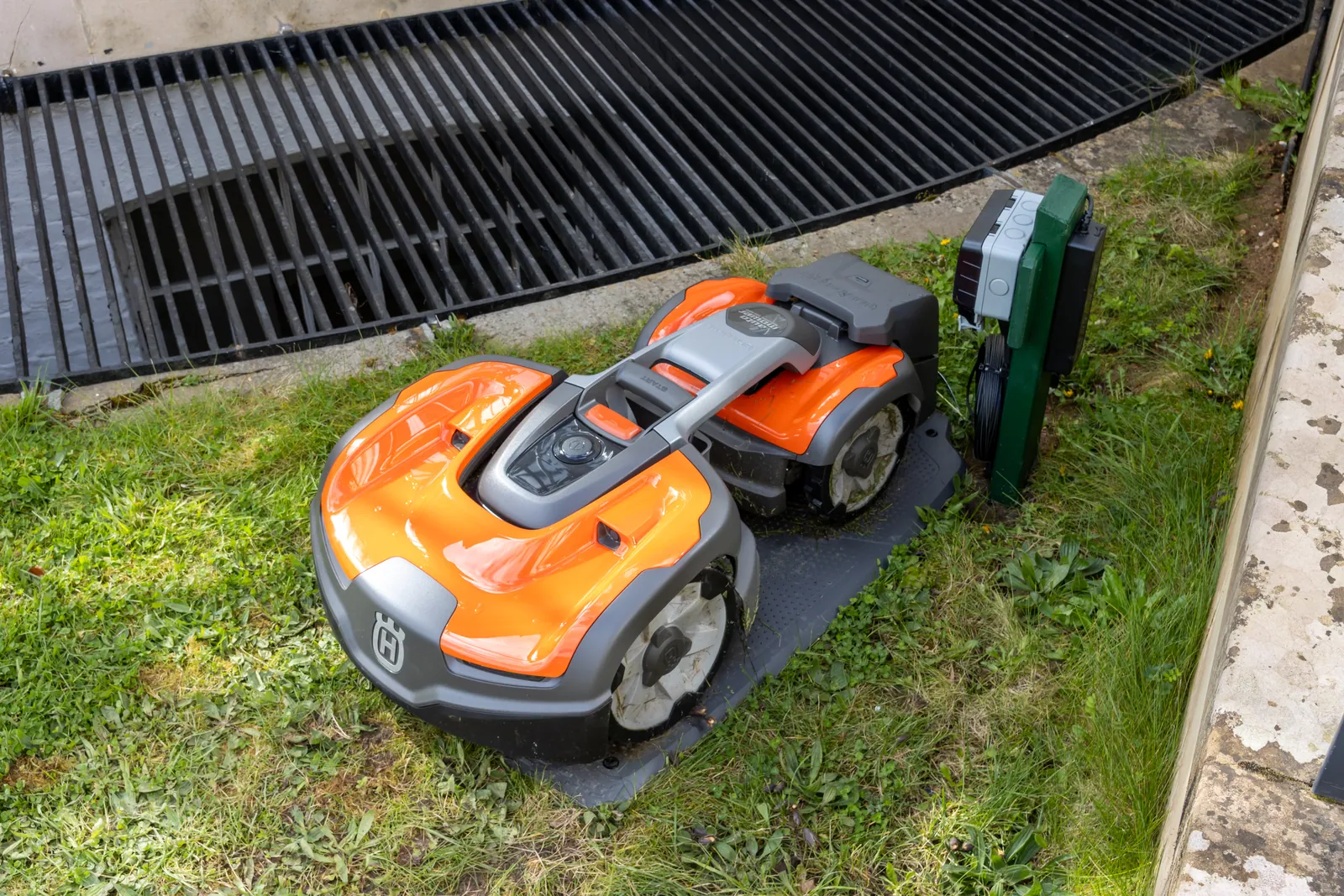
Garden and lawn
In the garden, robot mowers are mature; the Naio Oz is for professional vegetable growers, and the Unitree Go2 costs from about PLN 9,900 (≈ EUR 2,270 at NBP rate 4.3641 of 21 October 2026) in Polish shops.
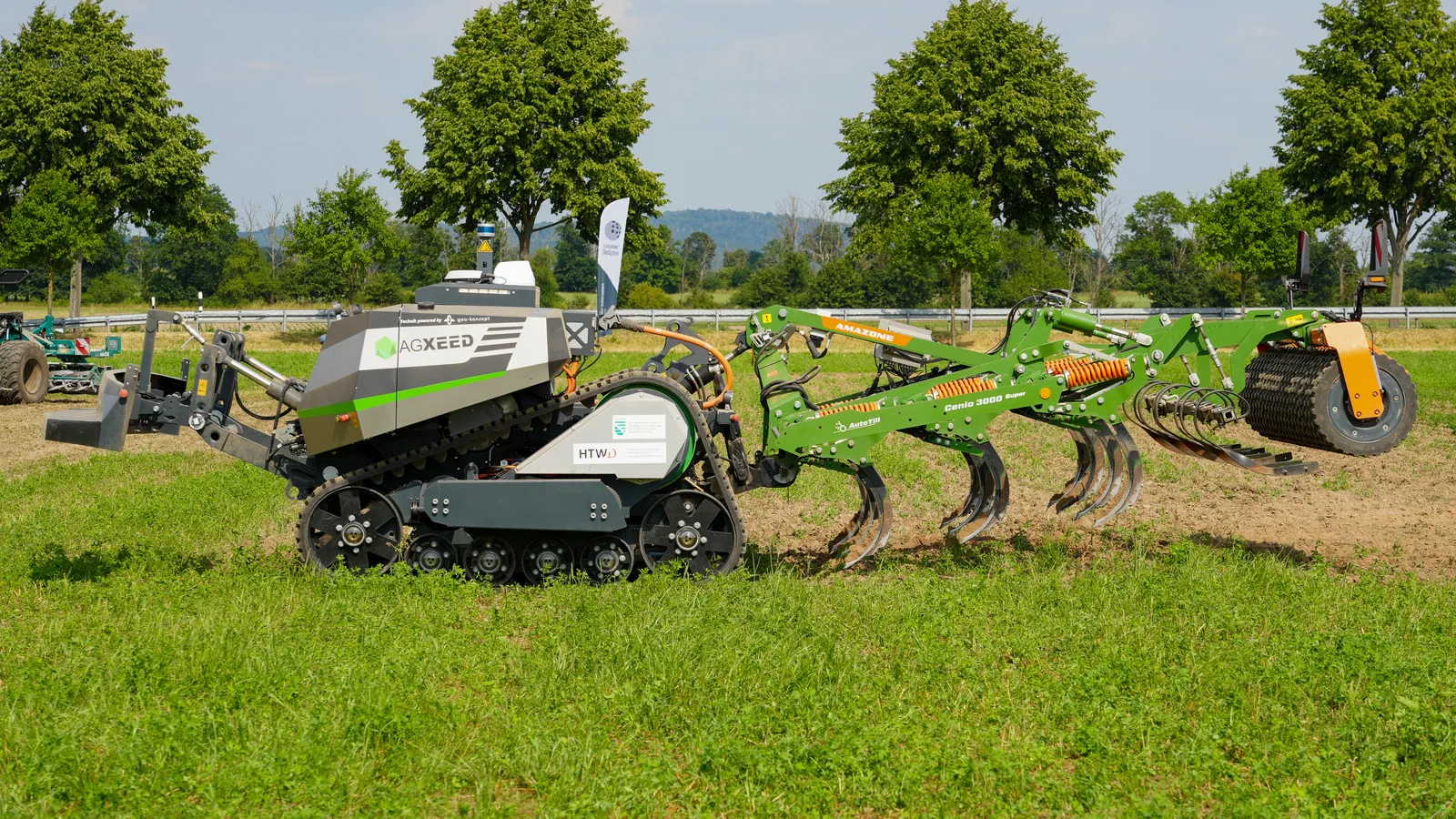
Agriculture
A laser that burns weeds without a gram of chemicals, a solar robot sowing with eight-millimeter accuracy: the field is no longer the exclusive domain of the tractor and the hoe.
Comparison
The direct competitor is the Danish FarmDroid FD20 from FarmDroid: it combines seeding and weeding in one solar-powered machine, and by 2025 about 10 FarmDroid units were working in Poland, so it has a real network here. It is not a separate model in our catalog, but you will find it in “Robots in Farming: How Field Automation Looks in Poland”.
A different approach is the Ecorobotix ARA from Ecorobotix, a precision sprayer that recognizes more than 50 weed species and can cut herbicide use by up to 95%; it is a machine for large farms, not a small helper. The Carbon Robotics LaserWeeder from Carbon Robotics destroys weeds with lasers (30 lasers of 150 W each, 42 cameras) and needs a 175 hp tractor. Of the three, the Naio Oz is the smallest and the most horticultural.
Similar models
 on sale
- on sale
 pilot
 on sale
 on sale
History
Naio Technologies is a company from the Toulouse region that specializes in autonomous robots for vegetable crops, vineyards and horticulture. Its range covers four models: the Oz, a small helper for weeding and seeding; the Ted, a straddle robot for vineyards; the Orio, a tool carrier; and the Jo, a narrow-tracked unit for closely spaced rows. The maker does not give a founding year or financial data, and no events (launches, generations) are recorded for the Oz in our catalog. We therefore give no dates that cannot be confirmed.
Sources
Frequently asked questions
Is the Naio Oz available in Poland?
No. The manufacturer Naio Technologies (France) names no Polish shop or official distributor for the Naio Oz; enquiries go through the manufacturer's website (naio-technologies.com). Confirm service in Poland before buying.
What payload and run time does the Naio Oz have?
The robot carries up to 60 kg and works up to 8 hours on a single battery charge.
How does the Naio Oz navigate the field?
It uses GNSS RTK navigation along a field map previously drawn by the operator, with no physical markers.
Who is the Naio Oz's main competitor?
In the vegetable-growing segment it competes with the Danish FarmDroid FD20, which combines seeding and weeding in one solar-powered machine.
Author, source and licence of the photo are given in the caption. Shop links may become affiliate links in future, details: How we make money · How we check