on sale
Yaskawa Electric Corporation
Yaskawa Motoman HC20DT
- 20 kgpayload
- 6 DOFdegrees of freedom
- —price
Data from manufacturer datasheets and product pages; median over the models of this category in the database.
The HC20DTP is a version of the HC20DT refined for precision and hygiene. The manufacturer states ±0.05 mm repeatability, three times better than the base HC20DT (±0.15 mm), while keeping the 20 kg payload, six axes and up to 1700 mm of reach. IP67 certification and approval for contact with food-grade grease make this model suitable for packing and palletizing lines in the food and pharmaceutical industries, where the station must be washed down under pressure. Like other cobots in the Motoman HC family, the HC20DTP has six integrated torque sensors and is programmed by Direct Teach, with no need to write code. In the segment of precise, high-payload cobots it competes with the hygienic variants of the Universal Robots UR20 and with the ABB GoFa range.
The robot weighs 140 kg (effective mass 116.7 kg); Yaskawa openly publishes this in its official data sheet (DS-964-F, December 2024), whereas the manufacturer does not disclose a price and directs customers to integrators. In Poland it is available through yaskawa.pl. The model is recommended for food and pharmaceutical plants that need precise palletizing while maintaining high standards of station cleanliness.
Data checked: · Sources: 2
no data
The manufacturer does not disclose the price of the Yaskawa Motoman HC20DTP and directs customers to integrators; we also have no prices from Polish resellers. We therefore state no figure as fact. As a reference point: the lighter ABB GoFa CRB 15000 (5 kg) costs around PLN 148,000 (≈ EUR 33,910 at NBP rate 4.3641 of 21 October 2026) from a Polish distributor, and a 20 kg cobot with an IP67 design will be, by estimate, more expensive, because the robot itself is usually only part of the budget. The calculation also includes a gripper, a pedestal, guards or safety scanners, pallet feeders, integration and operator training; settle the scope of training and service in the quote. Annual costs (inspections, wear parts, energy) depend on how intensively the robot works, so calculate them from the quote. State support: Poland's robotization tax relief (ulga na robotyzację) lets you deduct an additional 50% of the cost of a new robot, software, training and peripherals, but according to verified sources it applies to expenditures through 2026, and we found no announcement of an extension (as of September 2026); details in “Poland's Robotization Tax Relief”. The robot must meet the statutory criteria for an industrial robot, so ask a tax adviser.
The Yaskawa Motoman HC20DTP is a six-axis cobot with a 20 kg payload, in an IP67 design, approved for contact with food-grade grease, designed for the end of packing lines in the food industry, where the station has to be washed with a water jet. The most commonly cited application is precise palletizing in the food and pharmaceutical industries. There it is not only weight that counts but also hygiene and placement repeatability, and the manufacturer claims ±0.05 mm. The same design will work for loading crates and trays in meat and dairy plants and for stacking outer packs in pharmaceutical companies, where surfaces must be thoroughly disinfectable. In general manufacturing (factories) the HC20DTP can tend machines, that is, lift heavy parts off a press or lathe, but there its hygiene advantage is no longer needed, so it makes more sense to consider the cheaper variant without IP67, such as the Yaskawa Motoman HC20DT. The robot is programmed by Direct Teach: the operator guides the arm by hand and records points, with no code writing. Six integrated torque sensors detect contact with a person. Before the station can run without a cage, though, the risk assessment of the entire application, including gripper and product, must be completed (see “Robot Safety Standards”). You also need a gripper, for example from OnRobot or Robotiq, and safety sensors, for example SICK scanners. The reach of up to 1700 mm lets it serve a standard-size pallet without adding a linear axis, although the manufacturer does not state payload at full reach, so each case has to be calculated with an integrator.
Best suited to: food and pharmaceutical plants that palletize packaging up to 20 kg including the gripper, have a station subject to washdown, and want to put a robot next to people. It also makes sense when ±0.05 mm repeatability is a requirement, not a luxury. Who it is not for: companies that need neither IP67 nor such high accuracy. There it is better to ask about the cheaper Yaskawa Motoman HC20DT or the lighter Yaskawa Motoman HC10. Nor is it a good choice for small workshops looking for an off-the-shelf robot for a few tens of thousands of zloty: 140 kg of mass demands a solid pedestal or cart, and deployment is usually done by an integrator. If you do not know where to start, read “How to Buy a Cobot Step by Step”.
What is known is that all four HC models are sold in Poland directly by Yaskawa Polska of Wrocław, with no intermediaries, so that is where to ask, or at local integrators. We also found no described references from food plants, so we do not attribute any specific installations to the robot. From the general picture of the category, cobots of this class go mainly into palletizing and machine tending (see cobots and “What Is a Cobot and How Does It Differ from an Industrial Robot”). If you are looking for reference points, ask the supplier for a reference list from the food industry, ideally with a user contact.
The closest rivals have a similar payload but a different philosophy. The UR20 from Universal Robots (20 kg, 1750 mm reach, 64 kg weight) is more than twice as light, so it is easier to move between stations, and it has the largest accessory ecosystem, but we have no confirmed IP67 version for it, so for washdown use you need to check the manufacturer's data sheet (Universal Robots, comparison in “Universal Robots UR5e, UR10e and UR20 Compared”). The FANUC CRX-20iA/L (20 kg, 1418 mm reach) has a shorter reach, but it is usually chosen where a plant already runs on FANUC controllers. You will find a description of the series in “FANUC CRX: The Cobot Series with 8 Years of Zero Maintenance”. The Doosan H2017 (20 kg, 1700 mm reach) is a proposition for machining and palletizing with local support in Poland. The Techman TM20 (20 kg, 33 kg weight) stands out with a built-in camera, which makes tasks involving position recognition easier. None of them offers such a high claimed repeatability and a hygienic design at once, so when comparing always check the same parameters in the catalog data sheets (“How to Read a Robot Datasheet”).
Yaskawa Electric Corporation
Yaskawa Electric Corporation
Yaskawa Electric Corporation
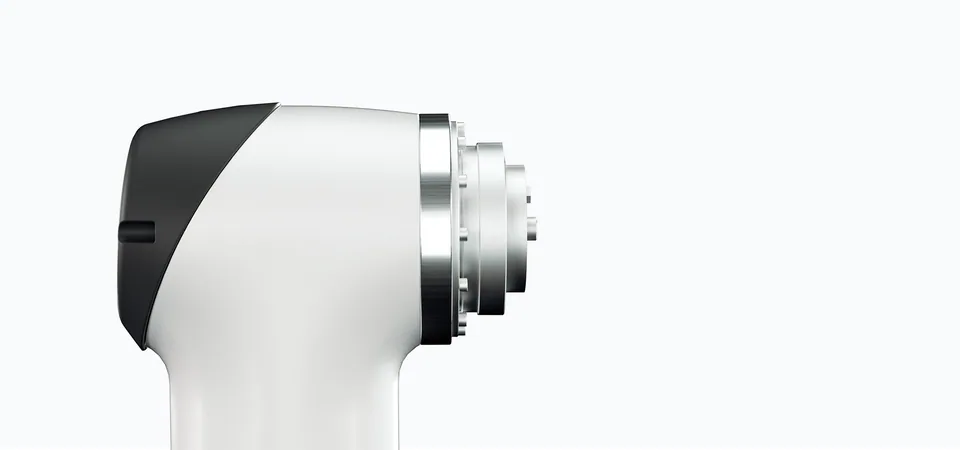
Yaskawa Electric has operated since 1915, and the Motoman HC (Human Collaborative) cobot series came to market gradually. The Yaskawa Motoman HC10 went on sale in 2016, and the Yaskawa Motoman HC20DT with a 20 kg payload in 2019. The HC20DTP is a refined variant of it: the manufacturer states ±0.05 mm repeatability, three times better than the ±0.15 mm of the base HC20DT, with the same payload, number of axes and reach. We do not know the exact launch date of the HC20DTP, since the sources do not give it. Yaskawa published the current data sheet (DS-964-F) in December 2024. More about the company in the profile of Yaskawa Electric.
Yes, the model is available through the retailers in Poland listed on this page.
±0.05 mm.
Mainly food and pharmaceuticals, thanks to its IP67 certification.
No, the manufacturer does not publish a price.
Shop links may become affiliate links in future, details: How we make money · How we check