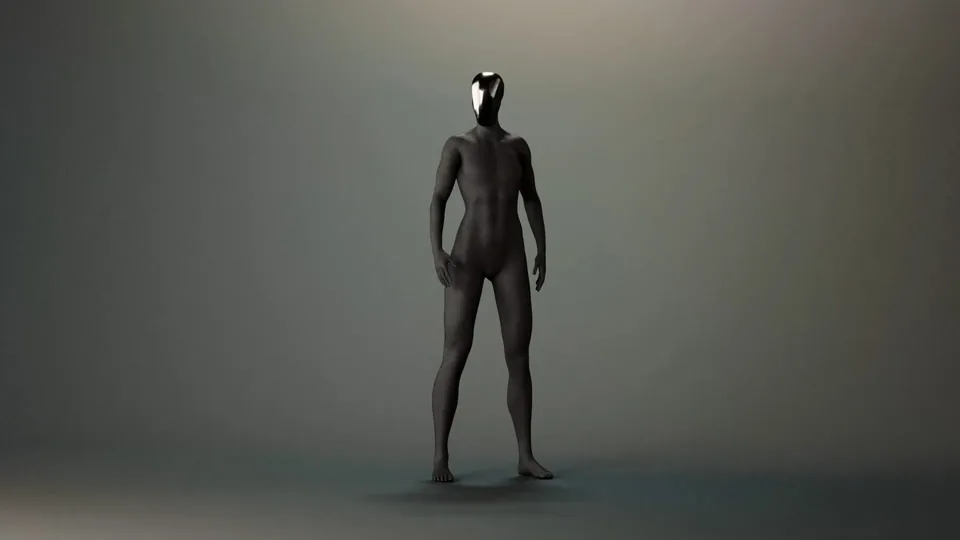
prototype
Price from
Before Clone Robotics showed the full Alpha, it presented Protoclone, a demonstrator limited to a torso and head, described as the first public presentation of a bipedal android with a musculoskeletal build.
Like the later Alpha, it uses about 1,000 synthetic muscles plus artificial “organs” that circulate water through the hydraulic system, which is meant to imitate the workings of the human body more closely than the typical electric actuators used by competitors. Protoclone is not a product for sale. It is a research and image demonstrator, shown without legs and without declared motion parameters or payload.
The manufacturer does not publish height, weight or degrees of freedom. Unlike Alpha, which is meant eventually to walk and reach the market as the “Robo Butler” in 2028, Protoclone remains a historical stage in the company's technology, important as a proof of concept for synthetic muscles but with no commercialization path of its own.
Among other early humanoid demonstrators, such as the earlier prototypes from Figure or Agility, it stands out for its unique drive approach rather than for functional sophistication. Of interest only to people following the history of Clone Robotics and artificial-muscle technology.
no data
Protoclone has no price and is not sold. The sources contain no valuation, so any figure would be a guess. The only anchor concerns a single component: Clone Robotics' realistic hand cost 2,800 USD (about 10,900 PLN (≈ EUR 2,500 at NBP rate 4.3641 of 21 October 2026)) in March 2023. Instead of a price: the company that built Protoclone had previously raised 17 million USD and in 2026 is running a 50 million USD round. How to calculate costs in general: “Humanoid Robot TCO: How to Calculate Total Cost”. If instead of Protoclone you are considering buying finished research hardware, a comparison of real prices is in “How Much Does a Humanoid Robot Cost in 2026”.
No confirmed distributor in Poland
Protoclone is more an exhibit than a tool, and it should be read that way. It is Clone Robotics' earlier demonstrator, limited to a torso and head, regarded as the first public presentation of a bipedal android with a musculoskeletal build, meaning a skeleton, muscles and a hydraulic system imitating the human body. It has around 1,000 synthetic muscles and artificial “organs” that circulate water through the drive system; the same drive, with a 500 W pump, later went into Alpha. The robot was shown without legs and without claims about motion, payload or range. So what is it for? Three things. First, as a proof of concept: it shows that synthetic muscles driven by water can move a human-like body. Second, as an image-building tool that drew media attention to the Wrocław startup. Third, as a platform for research into controlling such a system, with about 500 sensors and four depth cameras. This is research use (laboratories), not production use. No place has been planned for it on a shop floor or in a warehouse. How the classic humanoid it is compared with works is explained in “How Does a Humanoid Robot Work”. It also illustrates the debate over whether the future of humanoids belongs to electric motors or to drives closer to biology, a dispute covered from the software side in “VLA Models: How AI Controls Humanoid Robots in 2026”.
A good fit: people following the history of synthetic-muscle technology who want to understand where Clone Alpha came from. Students and researchers comparing drives, classic actuators versus hydraulic muscles (“Actuators in Humanoid Robots”). Journalists writing about Polish robotics.
Who it is not for: anyone looking for a product. Protoclone is a research and image demonstrator with no commercial path. Not for companies looking for a robot to do work. Not for buyers: there is no price and no offer of sale. If you are interested in this manufacturer and its target product, go to Clone Alpha. For university teachers looking for an interesting example for classes on biomimetics in robotics: this is one of the few builds where the inspiration is not the shape of the body itself but the way it moves. For technical editorial teams that set Polish achievements beside foreign ones: Protoclone nicely shows that Poland produces not only integrators but also original designs.
The robot appeared in presentations and demos. In the humanoid category, mainly universities and foreign companies are active in Poland today; an overview of Polish robotics companies is in “Polish Robotics Companies”.
Since Protoclone is not a product, good reference points make more sense than “replacements”. Clone Alpha: the successor, with a full body and a home product planned for 2028. Reachy 2: a French research robot for manipulation work, 70,000 USD, available to order. Engineered Arts Ameca: Engineered Arts, 187 cm and 61 DOF; a robot for research on interaction and facial expression. Unitree G1: the cheapest research hardware in this group (13,500 USD). Figure 01: an early Figure prototype, interesting as another example of a humanoid's “historical stage”.
Clone Robotics was founded in Wrocław in November 2021. The first publicly shown element was, in January 2023, a hand with synthetic muscles, followed by a realistic hand priced at 2,800 USD. Protoclone, a torso with a head, is an intermediate stage between the hand and the full Alpha. Dates in the sources differ: some accounts point to April 2024, others tie the showing to December 2024, when Alpha was presented, so the year 2024 is certain but the month is not. In December 2024 Clone opened a pre-sale of 279 Alpha units. Context: “Polish Robotics Companies”.
Model unveiled
Polish startup Clone Robotics unveils Protoclone/Clone Alpha, a musculoskeletal humanoid Clone Robotics
Clone Robotics unveils Clone Alpha, the first full-size humanoid with synthetic muscles, and opens pre-orders for 279 units Clone Robotics
Clone Robotics plans to expand into Silicon Valley and a consumer price of about $20,000 as part of its 'synthetic human' roadmap; a new $50 million funding round is under way (after an earlier $17 million) Clone Robotics
Clone Robotics opens a second office in Mountain View, California, signaling a move beyond its Polish (Wroclaw) roots Clone Robotics
No. The Clone Protoclone is a prototype or research platform with no commercial offer in Poland; any sale would be announced by the manufacturer (Poland).
It is Clone Robotics' earlier research demonstrator, limited to a torso and head, regarded as the first public presentation of a bipedal android with a musculoskeletal build.
No. It is a research and image demonstrator, not a commercial product.
About 1,000 synthetic muscles plus artificial organs that handle the hydraulic circulation of water, as in the later Alpha.
Author, source and licence of the photo are given in the caption. Shop links may become affiliate links in future, details: How we make money · How we check