prototype
no official photo
Data from manufacturer datasheets and product pages; median over the models of this category in the database.
Humanoid robotsresearch platform
ARMAR-7
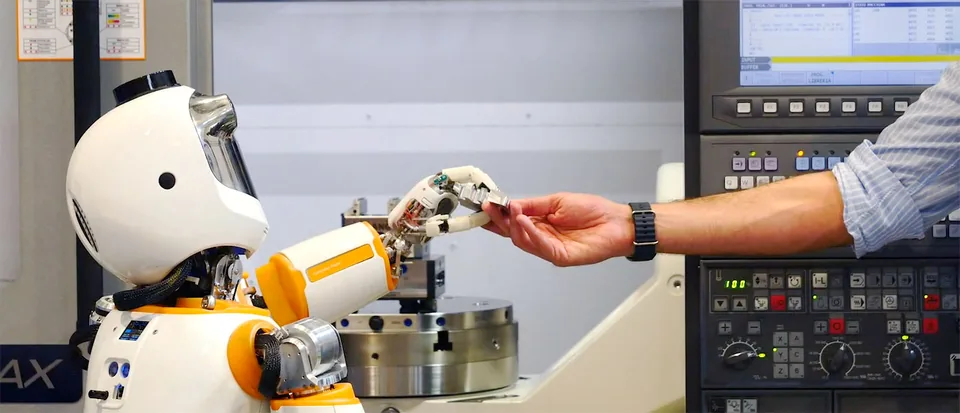
ARMAR-7 is the latest assistance humanoid from the High Performance Humanoid Technologies Lab at the Karlsruhe Institute of Technology, a group that has built the ARMAR family since 1999.
Price from
no public price
No confirmed distributor in Poland
- 29DOFDegrees of freedom
Key facts
- Specificationsdegrees of freedom 29 DOF
- Statusresearch platform
- Availability in Polandnot confirmed
Summary
- ManufacturerKarlsruher Institut für Technologie (KIT), High Performance Humanoid Technologies Lab (H²T)
- CategoryHumanoid robots
- Statusresearch platform
- Availability in PolandNo confirmed distributor in Poland
ARMAR-7 is the latest assistance humanoid from the High Performance Humanoid Technologies Lab at the Karlsruhe Institute of Technology, a group that has built the ARMAR family since 1999.
The robot combines two torque-controlled arms with eight joints each, underactuated five-finger hands with four degrees of freedom and an RGB camera built into each palm, a three-axis head carrying several camera systems and a torso that bows in two axes. All of this rides on a holonomic base with three omniwheels, so the body can move in any direction without turning first.
Counting arms, hands, head and torso gives 29 degrees of freedom. The control software is ArmarX, the lab's open-source cognitive architecture. Typical tasks are opening doors, loading a dishwasher, handing objects to a person and learning new jobs from speech and demonstration, with homes and care facilities as target settings.
ARMAR-7 is a research platform and not for sale; KIT publishes neither height nor weight. Its predecessors are ARMAR-6 and the kitchen robot ARMAR-III, while Toyota T-HR3 shows a different approach to assistance humanoids.
Specs
-
Degrees of freedom29in line with the category median (29.5, n=200)
- category medianA higher value doesn't always mean a better robot; it depends on the application.
Motion and manipulation
- Degrees of freedom
- 29
- Hand degrees of freedom
- 4
Electronics and AI
- Drive
- electric, torque-controlled arms, holonomic three-omniwheel base
- Sensors
- RGB camera in each hand, several camera systems in the head
Additional specs
- Form factor
- wheeled-base humanoid
- Fingers
- 5
- Country of origin
- DE
- Open source
- yes
Price and availability in Poland
no data
Dealers in Poland
No confirmed distributor in Poland
Applications
Typical applications
Target group
Comparison
Robot comparison toolSimilar models
- prototype
- on sale
- prototype
- research platform
 prototype
History
no data
Sources
Shop links may become affiliate links in future, details: How we make money · How we check