on sale
Sophia, Hanson Robotics' 2016 social robot, holds conversations and has walked since 2018, but the maker gives no technical data or price.
Price from
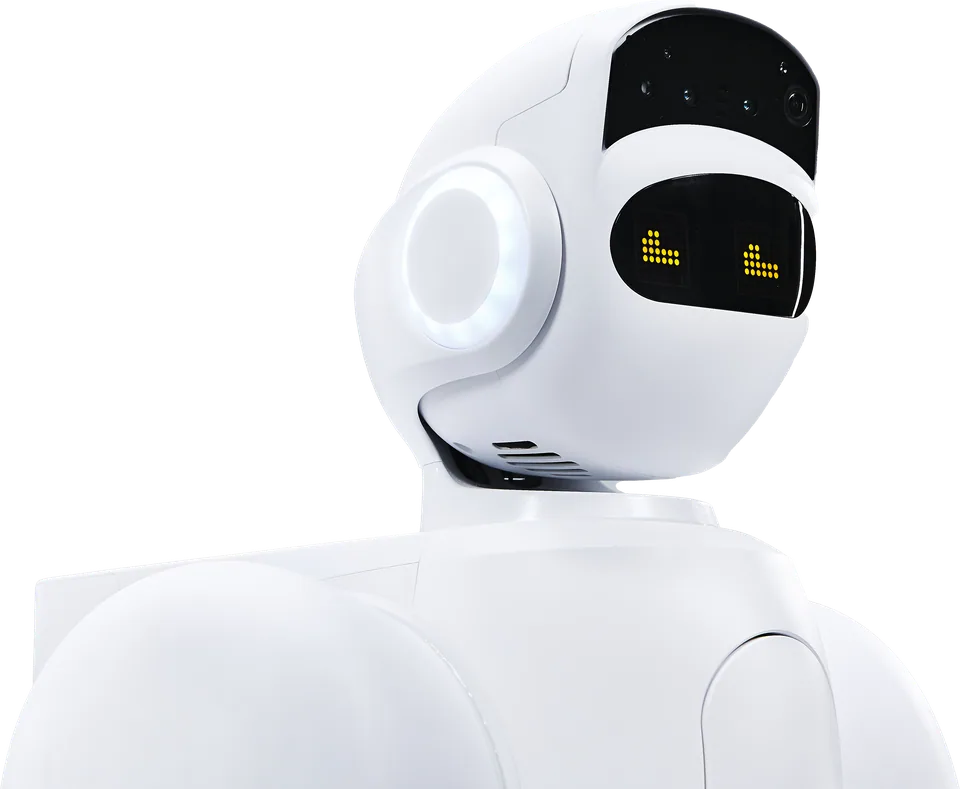
Sophia is the most recognizable social robot in the world, activated in February 2016 by Hong Kong-based Hanson Robotics and shown publicly a month later at the SXSW festival. Her face mimics more than 60 facial expressions, cameras in her eyes track the faces of people she talks to and maintain eye contact, and an NLP layer lets her hold a conversation, although the manufacturer does not disclose which language model powers it.
Since January 2018 Sophia has been able to walk, which sets her apart from earlier, static versions. Her look is inspired by Nefertiti, Audrey Hepburn and the wife of her creator, David Hanson. Unlike the industrial robots in this comparison, Sophia has no published technical data: no height, weight, degrees of freedom or price.
Hanson Robotics treats her as a showcase and research platform, not a catalog product. Applications include events, senior care, therapy and education, but these are mostly demonstrations and appearances, not commercial deployments at large scale. The model is not offered in Poland.
no data
There is no Sophia price. The manufacturer publishes no price list and no technical data, because it treats her as a showcase platform, not a catalog product. We do not put down an amount.
Realistically, the cost for a Polish company will be a rental or participation in an event, not a purchase. As a rough estimate, a single appearance by a humanoid robot at an event costs thousands of zloty per day, but the scale depends on the provider, logistics and licensing; a reference point is in “Renting a Humanoid Robot for an Event”. If you are nevertheless considering buying a humanoid for work, read “How Much Does a Humanoid Robot Cost in 2026”.
Training? With a rental, the provider handles it.
No confirmed distributor in Poland
Sophia is probably the most recognizable social robot in the world. Built by Hong Kong-based Hanson Robotics, activated in February 2016 and shown publicly a month later at the SXSW festival, she became the face of a whole generation of social robots. Her face mimics more than 60 facial expressions, cameras in her eyes track the people she talks to and maintain eye contact, and an NLP layer lets her hold a conversation. The manufacturer does not disclose which language model is behind it.
So what is she for? Above all, for shows: conferences, trade fairs, corporate events (events), where a robot with a human face draws attention and starts a conversation. The uses the manufacturer lists also include senior care, therapy and education (schools). In practice, though, these are mainly demonstrations and appearances, not mass commercial deployments.
Sophia does not do day-to-day work such as reception or customer service. Service robots described in the category “Service robots” and in the text on hotels and restaurants (“Service Robots in Restaurants and Hotels”) are better suited for that.
Since January 2018 Sophia has also been able to walk, which sets her apart from earlier, static versions. An interesting side thread: cameras in the eyes mean processing of facial images, a topic for a separate text, “Data Security: Robots with Cameras and the GDPR”.
Yes: for conference, trade fair and event organizers who want the "robot with a face" effect, most likely as a rental rather than a purchase. Also for human-robot interaction researchers, and for media and presenters who want to illustrate the development of social robotics. If you are interested in renting, we recommend “Renting a Humanoid Robot for an Event”.
No: for companies looking for a robot for everyday customer service, reception or physical work. Sophia has no published technical data (height, weight, DOF), no list price and, according to our catalog, is not offered in Poland. Not for schools looking for a tool to teach programming; the robots in “Educational Robots for Schools and Universities” serve that better. Not for those who expect a conversation with a robot to be "real intelligence": the manufacturer treats Sophia as a showcase and research platform.
Worldwide, the manufacturer lists events, senior care, therapy and education, but in practice these are mostly shows and appearances, not large-scale production deployments. If you are looking for real deployments of service robots, look at the category “Service robots”, where there are examples from hotels and restaurants, including ADAM, the bartending arm from Richtech Robotics (Richtech ADAM), working at NVIDIA's headquarters and in a Walmart store.
If you want a social robot for shows or reception, consider:
Engineered Arts Ameca is the Engineered Arts Ameca: 187 cm, 61 actuated movements, non-walking and mains-powered, for trade fairs and HRI research; launched in December 2021. Unlike Sophia, it does not walk.
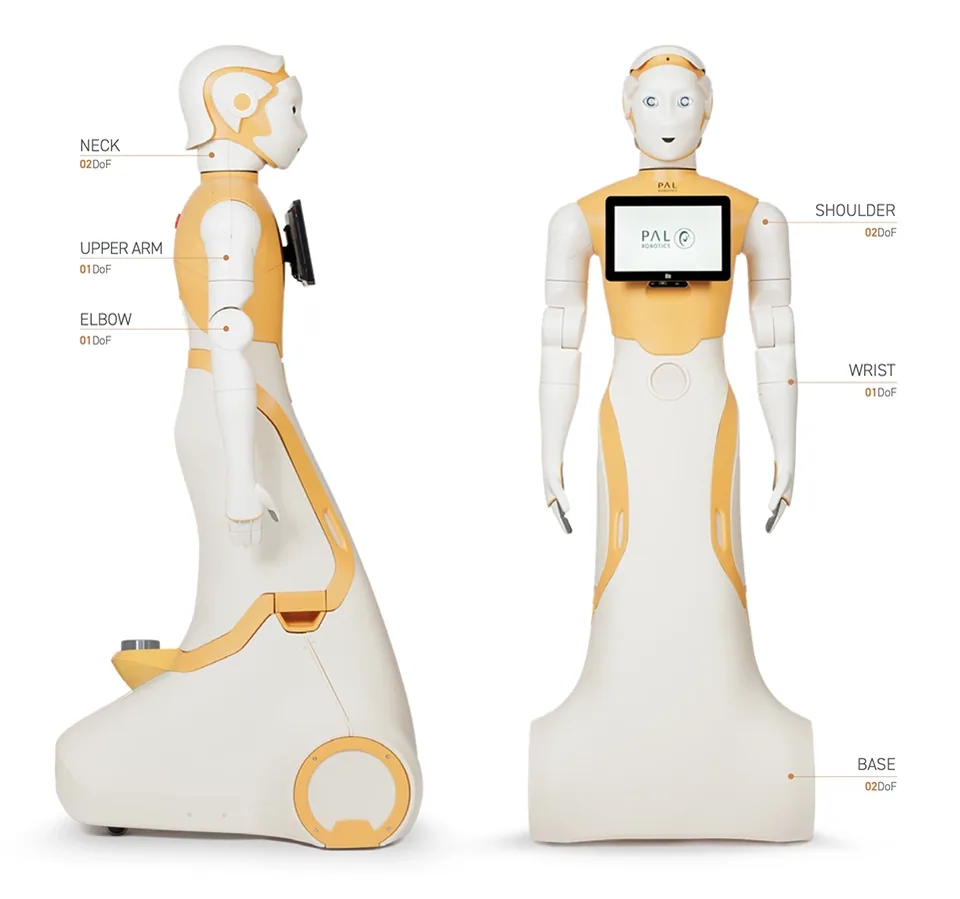
PAL Robotics ARI is a social and service robot from PAL Robotics, 165 cm, speaking more than 20 languages; price on request. Sensible for reception and HRI research.
Pepper is Pepper, a wheeled robot (120 cm, 28 kg), withdrawn from production in 2024; about 27,000 units were made.
NAO is a small educational robot (58 cm, 25 DOF), sold in about 20,000 units. A good choice for a school, but not for the stage. The choice depends on whether you need a show effect (Ameca), reception (ARI) or programming education (NAO).
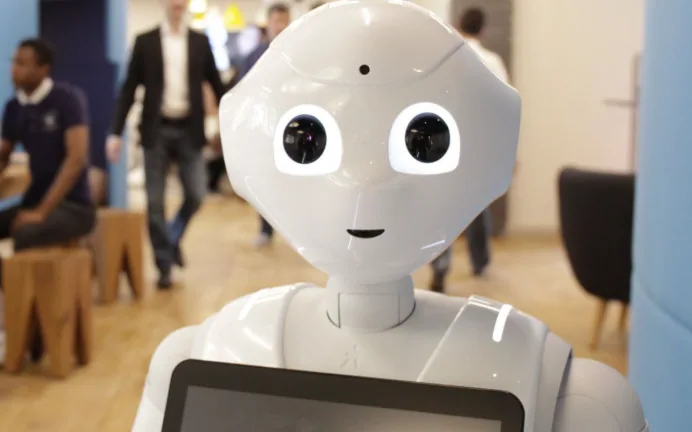
Aldebaran / SoftBank Robotics / United Robotics Group (now Maxtronics)
Sophia was activated in February 2016, and her public debut came a month later at the SXSW festival. Hanson Robotics (Hong Kong, 2013) made her an icon, although the product remained at pilot status. The milestone we can confirm: January 2018, when Sophia gained functional legs and could walk. Earlier versions were static. We have no other events on record, so we do not add legends that circulate in the media. The backdrop of the humanoid market is described in “Humanoid Robot Market Forecasts”, and the debate on work and robots in “Humanoid Robots and the Polish Labor Market”.
Model unveiled
Not off the shelf. The Sophia runs in pilot programmes with selected customers, and there is no official seller in Poland.
Since January 2018, when Hanson Robotics gave her functional legs.
The manufacturer does not publish them. Sophia is a showcase and research platform, not a catalog product with an open specification.
At events, in education, therapy and senior care, mostly as demonstrations rather than production deployments.
Author, source and licence of the photo are given in the caption. Shop links may become affiliate links in future, details: How we make money · How we check