on sale
Manufacturer
tmsuk of Japan: Pedia_Roid patient simulator plus inspection and senior-care robots, no prices or specifications.
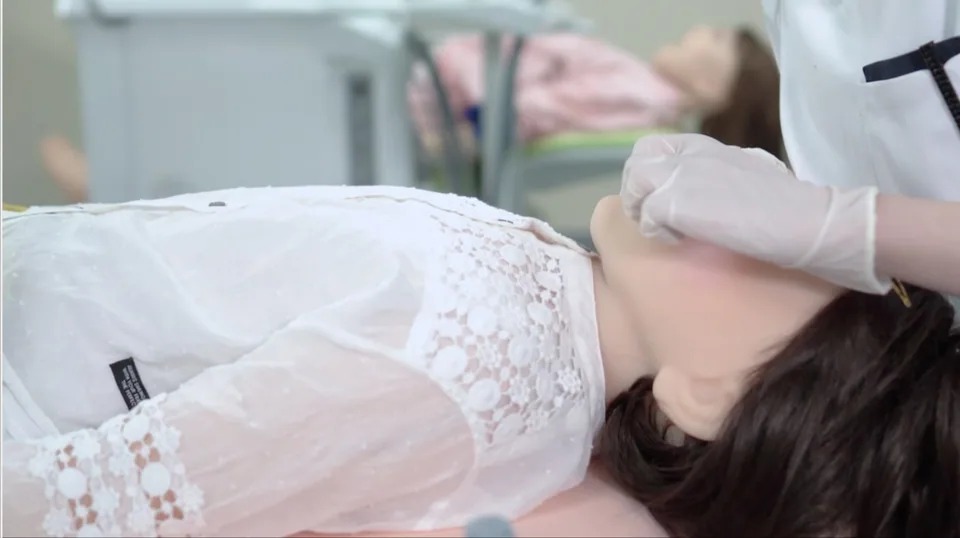
Japan's tmsuk, based in Kitakyushu and active since 1997, runs several parallel service-robot lines instead of one flagship product. Pedia_Roid, the only known model on sale, is a humanoid pediatric patient simulator used in emergency-medicine training, presented at CES in January 2022.
Alongside it the company develops the RODEM mobility platform for seniors (deployed in Tokyo since 2023), the SPD1 sewer inspection robot (since November 2022) and swarm robots for work above suspended ceilings (since July 2024).
None of these products has published physical specifications or a price list on the company's website, which makes comparison with niche competitors in the medical and inspection segments difficult. tmsuk remains a niche company with no presence on the Polish market.
The Japanese company tmsuk, from Kitakyushu, has operated since 1997 and, instead of a single flagship product, runs several parallel lines of service robots. Best documented is Pedia_Roid, a humanoid pediatric patient simulator used in emergency-medicine training and shown at CES. Alongside it the company develops the RODEM mobility platform for seniors, deployed in Tokyo since 2023, the SPD1 sewer-inspection robot offered since November 2022, and swarm robots for work above suspended ceilings, available since July 2024. This portfolio shows a niche strategy: rather than competing for one big market, tmsuk looks for tasks in which a robot replaces work that is hard, dangerous or specialized. Neither Pedia_Roid nor the other products have physical parameters or a price list published on the company's site, so knowledge of the scale of its activity is limited. The wider context of medical robots in the country is described in “da Vinci Robots in Polish Hospitals”, and the type of specialist tasks in the specialist robots category. This diversity is an asset, but also the reason why the maturity of each line is hard to judge separately.
In our catalog tmsuk is represented by Pedia_Roid, a humanoid child-patient simulator for training in a hospital emergency department. It is 110 cm tall, weighs 23 kg and has 24 degrees of freedom (DOF) — what these are is explained in “Degrees of Freedom (DOF) in Humanoid Robots”. The robot simulates, among other things, seizures and bleeding, which lets a medical team practice its response without a real patient. No price is given and the manufacturer does not publish a price list, so we state no figure. Besides Pedia_Roid the company offers the RODEM, SPD1 and ceiling robots mentioned above, but they are not in our catalog as separate models with technical data, so we do not describe them in detail. For medical schools and simulation centers, fit with the training curriculum and running costs will be key, and the manufacturer does not disclose that information; a way of assessing gaps in documentation is described in “How to Read a Robot Datasheet”. The area of use is outlined on the page “Hospitals and rehabilitation”. A simulator with a child's body mechanics can be valuable in training, because real small patients in life-threatening condition are rarely practiced on, and decisions must be made quickly. The manufacturer does not describe, however, how scenarios are configured or what the instructor software looks like.
tmsuk remains a niche company and is not present in the Polish market. In the medical and inspection segments there is no single leading competitor, because each product line has a different profile. For comparison, another Japanese firm with a narrow, specialist profile is presented in Cyberdyne with the model HAL, tied to rehabilitation, and the medical dimension of robotics is also described in “Exoskeletons in Rehabilitation and Industry”. The advantages of tmsuk are the diversity of applications and long standing, as it has operated since 1997; the weakness is the lack of public data on prices, parameters and the number of deployments beyond isolated mentions. Since the manufacturer does not state sales volumes, we do not assess market share. The only model on sale, Pedia_Roid, is a specialized training tool, not a mass-market product. Anyone seeking a training simulator should compare it with classic medical manikins, which can be cheaper but do not move as realistically; the manufacturer does not disclose concrete prices.
tmsuk is absent from the Polish market, and in our catalog Pedia_Roid is listed as unavailable in the country. The sources we checked contain no information on a Polish distributor or on deployments at domestic medical universities or simulation centers. A facility interested in such a simulator would have to settle import, service and compliance with training requirements on its own. Medical use is discussed on the page “Hospitals and rehabilitation” and university use on universities. Sensible first steps are to ask the manufacturer about availability outside Japan and whether it supports training in English. It is also worth asking about the availability of spare parts outside Japan.
tmsuk is an interesting, niche company with a broad but poorly documented portfolio, and Pedia_Roid is a specialized tool for emergency medicine. The lack of prices, parameters and a Polish presence means that for a Polish customer it remains an observation, not an offer. For medical training centers in Poland it is for now a technological curiosity worth watching. If the company ever discloses prices and opens sales abroad, the assessment may change.
tmsuk