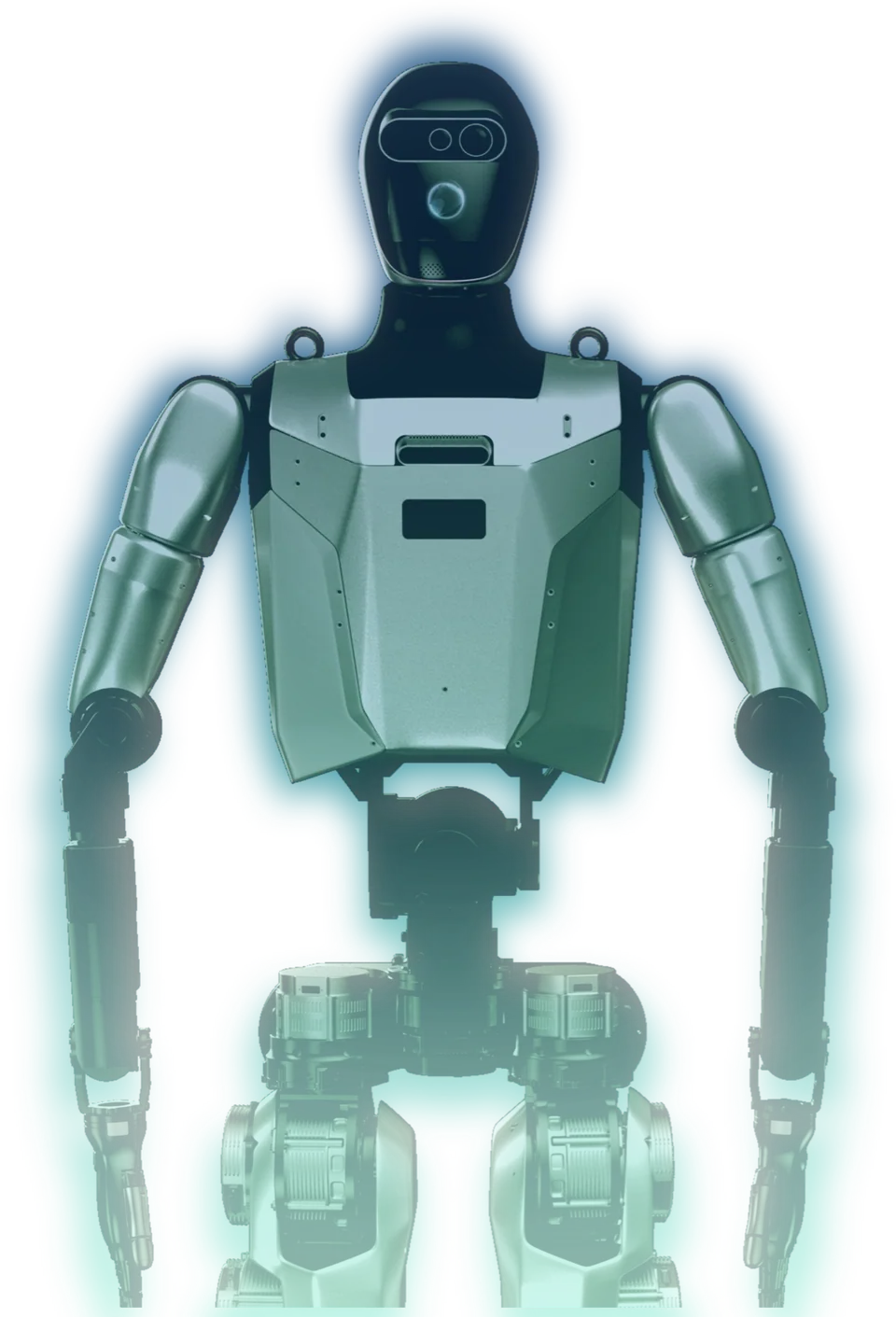
prototype
OpenLoong (Humanoid Robot (Shanghai) Co., Ltd. / Open Atom Foundation)Humanoid robots
OpenLoong Qinglong
- —price
Manufacturer
Open-source Chinese Qinglong humanoid from the Open Atom foundation: it publishes schematics and data, not just a product.
OpenLoong is an open-source initiative developed by the Open Atom Open Source Foundation and run operationally by Humanoid Robot (Shanghai) Co., Ltd. Unlike most of the Chinese humanoid makers covered here, the project publishes open hardware schematics, control software and datasets for its Qinglong (青龙) platform, complemented by the smaller Qinglong Mini and the NanoLoong educational robot.
The offering is rounded out by the OmniT-Hand dexterous hand and the Gewu simulation platform for learning in a virtual environment (embodied AI). The open-source model sets OpenLoong apart from commercial rivals in China, such as Noetix (Bumi, N2) among the companies covered here: the aim is to build a research ecosystem, not to sell a finished product.
The manufacturer does not state a founding year, financial data or availability outside China; for European robotics researchers, though, it may be a source of technical documentation worth following.
OpenLoong is an open-source initiative developed by the Open Atom Open Source Foundation and run operationally by the company Humanoid Robot (Shanghai) Co., Ltd. in Shanghai. The manufacturer does not state a founding year, so we do not know how long the project has been running or how it is funded. What is known is that it differs from most Chinese companies building humanoid robots: instead of selling a finished machine, it publishes open hardware schematics, control software and datasets. The flagship platform is Qinglong (青龙), complemented by the smaller Qinglong Mini and the educational NanoLoong robot. The package also includes the OmniT-Hand dexterous hand and the Gewu simulation platform used for learning in a virtual environment, in the embodied AI stream. Such a model makes sense for researchers, because it lets them inspect the design, modify it and reproduce results rather than simply buy a black box. How such a machine works from the inside is explained in “How Does a Humanoid Robot Work”, and the terms of this field are collected in “Robotics Glossary: 65 Terms with Polish Equivalents”. The wider context of the Chinese market in which OpenLoong operates is described in “Chinese Humanoid Robots”. What is missing is independent information on how many teams actually use the published materials.
The heart of the project is the OpenLoong Qinglong, a fully open-source research humanoid from Shanghai, with prototype status. Its dimensions, weight, degrees of freedom and payload have not been published, so we do not compare it numerically with other designs. How to read such parameters is explained in “Degrees of Freedom (DOF) in Humanoid Robots”. An ecosystem has been built around the platform: the smaller Qinglong Mini, the NanoLoong educational robot, the OmniT-Hand for tasks requiring precision and the Gewu simulator. The value of the offer lies in access to documentation, not in a finished product with a price and a warranty. For that reason there is no price list or delivery dates, and a purchase in the usual sense is unlikely. Typical users are laboratories and universities, which can use the project in a laboratory or at a university. We describe the whole class of devices in the category “Humanoid robots”. Before any decision it is worth checking the current contents of the repositories, since the scope of published materials may change.
OpenLoong does not compete for customers in the usual sense, because it sells no finished product. Its rivals are rather other research projects and commercial humanoid platforms from China. The closest reference point is Noetix Robotics, maker of the Bumi and N2 models, which focuses on selling machines while OpenLoong builds a research ecosystem. Among larger commercial firms one can name Unitree Robotics and UBTECH Robotics, and among Western designs, also open ones, Pollen Robotics. What they share is a clear market offer, which OpenLoong lacks. The project's strength lies elsewhere: in the transparency of its design and the ability to repeat experiments. The manufacturer gives no financial data or information on availability outside China, so we cannot judge either its scale or its durability. The absence of commercial support is a significant limitation for teams that need servicing and continuity of supply.
There is no confirmed information on OpenLoong's presence in Poland: the manufacturer names no distributors, and the materials we checked show no Polish deployments. Because the project is open, Polish universities and laboratories can use its documentation regardless of any sales channel. This requires in-house skills in mechanics, electronics and software. If you are looking for teams that could take on such work, see “Polish Robotics Companies” and the text “How to Start Learning Robotics in Poland”. For a Polish user this has a practical upside: the cost of entry is limited to your own work and components, with no intermediaries. The downside is the lack of servicing and a warranty, which in case of a fault remain the team's own responsibility.
OpenLoong is worth following if you do research on humanoid robots and value open documentation. It is not an offer for a company that wants to buy a ready-made robot with servicing and a price on a list. Before you start, compare the approach with Pollen Robotics and check whether you have a team able to build and maintain such a platform on its own.
OpenLoong (Humanoid Robot (Shanghai) Co., Ltd. / Open Atom Foundation)
OpenLoong (Humanoid Robot (Shanghai) Co., Ltd. / Open Atom Foundation)Humanoid robots