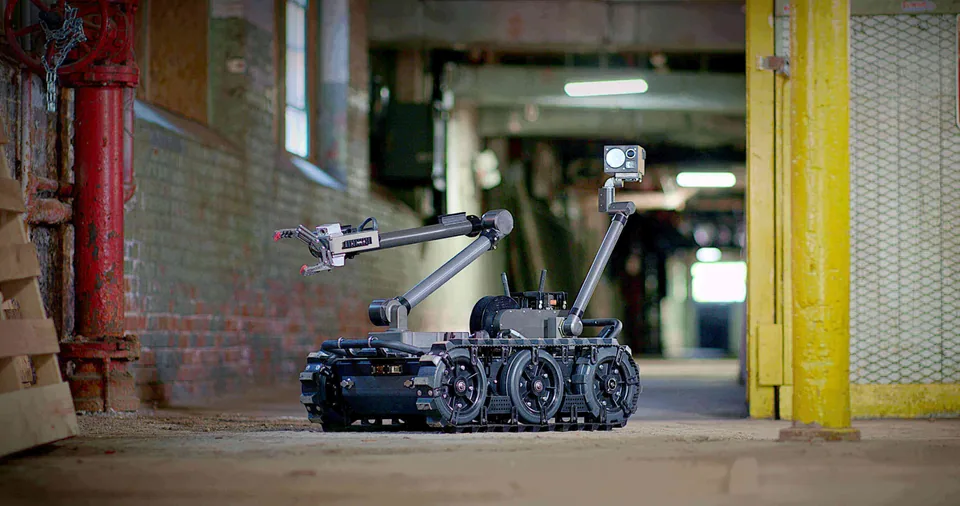
no official photo
Size and key figures
Size and key figures: Kobra 725Payload: 150 kg, category median 375 kg. Weight: 250 kg, category median 512 kg.Figures against the category medianPayload150 kgcategory median: 375 kg (n=44)Weight250 kgcategory median: 512 kg (n=52)

Data from manufacturer datasheets and product pages; median over the models of this category in the database.

Kobra 725

Lifting 150 kg with a reach of 3.5 m, the Kobra 725 is the heavy end of Teledyne FLIR Defense's EOD line and the commercial twin of the Kobra 710 that the US Army fielded as its Common Robotic System-Heavy (CRS-H).

Price from

no public price
No confirmed distributor in Poland
  • 250kgWeight
  • 150kgPayload
  • 3.61m/sSpeed

Key facts

  • Specificationsweight 250 kg · payload 150 kg · speed 3.61 m/s
  • Statuson sale
  • Availability in Polandnot confirmed

Summary

Lifting 150 kg with a reach of 3.5 m, the Kobra 725 is the heavy end of Teledyne FLIR Defense's EOD line and the commercial twin of the Kobra 710 that the US Army fielded as its Common Robotic System-Heavy (CRS-H).

Announced in June 2022, the tracked robot weighs under 250 kg according to the press release (EDR says 'around 250 kg'), is 133 cm long, drives at 13 km/h and folds to fit inside small response vehicles. Vertical reach is 350 cm on the product page, 'almost 4 m' in the press release.

Radio control follows the IOP interoperability standard, so the robot works with third-party controllers and payloads; cameras provide the operator's view. The Kobra 725 is unarmed and has no armed variants; its purpose is large-device disposal, vehicle entry and other tasks that need more strength than lighter robots can muster.

It is on sale with pricing on request, and the maker does not detail endurance beyond the figures above. Within the Teledyne FLIR family it tops the ladder above the PackBot 525 (26 kg) and the Centaur (73 kg). Poland's heavy EOD platform, the 300 kg PIAP IBIS, lifts 50 kg – a third of the Kobra's capacity at greater weight.

Specs

Sources: 3

  • Weight250 kg
    −51% vs. the category median (512.5 kg, n=52)
  • Payload150 kg
    −60% vs. the category median (375 kg, n=44)
  • Speed3.61 m/s
    +8% vs. the category median (3.33 m/s, n=50)
  • category medianA higher value doesn't always mean a better robot; it depends on the application.

Dimensions and weight

Weight
250 kg

Motion and manipulation

Payload
150 kg
Speed
3.61 m/s

Electronics and AI

Drive
electric, tracks
Sensors
cameras

Additional specs

Subcategory
military
Design type
EOD robot, tracked, heavy class
Control
radio, IOP-compliant (CRS-H)
Equipment / armament
150 kg lift, 350 cm vertical reach; folds for small vehicles
Operators
USA (Army: Kobra 710 as CRS-H; 725 commercial version)
Armed
no
Length (cm)
133
Max. speed (km/h)
13
Country of origin
US

Datasheet (PDF)

Price and availability in Poland

no data

Dealers in Poland

No confirmed distributor in Poland

Applications

Typical applications

  • large-device disposal, vehicle entry

Target group

  • military and police bomb squads

Comparison

Robot comparison tool

Similar models

  • Centaur (MTRS Inc II)
    in service

    Teledyne FLIR Defense (ex iRobot Defense / Endeavor Robotics)
    Centaur (MTRS Inc II)

    • 72.6 kgweight
    • 480,600*price (PLN)
  • on sale

    Teledyne FLIR Defense (ex iRobot Defense / Endeavor Robotics)

    PackBot 525 (PackBot 510)

    • 26.3 kgweight
    • 20 kgpayload
    • —price
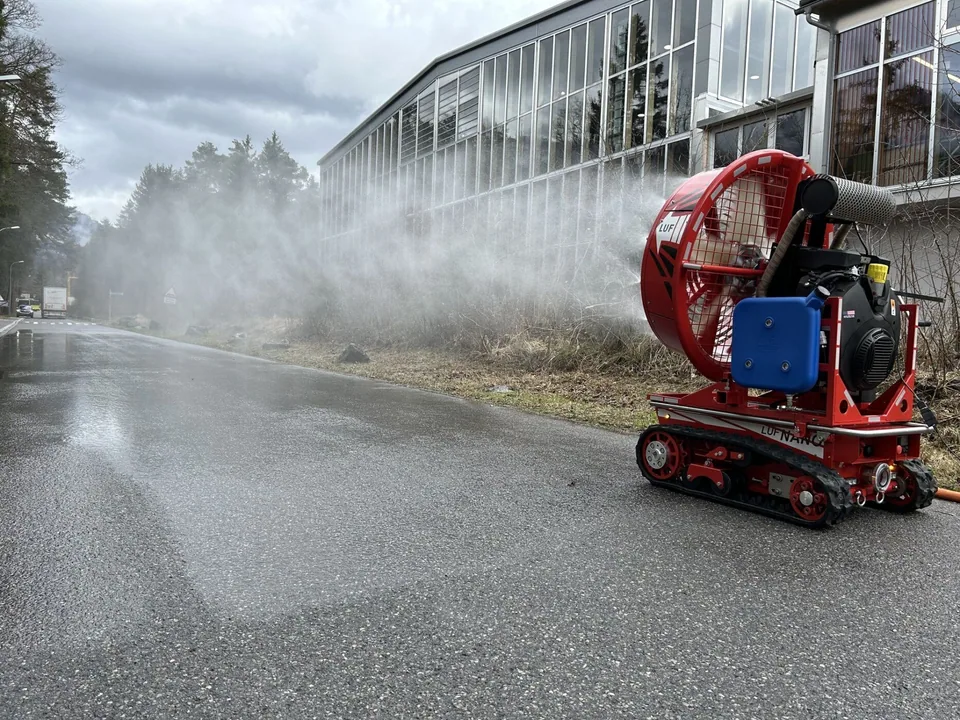
  • LUF Nano
    on sale

    LUF GmbH

    LUF Nano

    • 220 kgweight
    • 250 kgpayload
    • 875,400*price (PLN)
  • on sale

    Sieć Badawcza Łukasiewicz – PIAP (Przemysłowy Instytut Automatyki i Pomiarów)

    PIAP IBIS

    • 300 kgweight
    • 50 kgpayload
    • —price
  • on sale

    Sieć Badawcza Łukasiewicz – PIAP (Przemysłowy Instytut Automatyki i Pomiarów)

    PIAP EXPERT

    • 200 kgweight
    • 15 kgpayload
    • —price

History

  1. Model unveiled

Sources

  1. flir.com
  2. edrmagazine.eu
  3. businesswire.com

Shop links may become affiliate links in future, details: How we make money · How we check